Journal of Sacred Work

Caregivers have superpowers! Radical Loving Care illuminates the divine truth that caregiving is not just a job. It is Sacred Work.

  • Journal of Sacred Work

    Journal of Sacred Work

    Radical Loving Care in Healthcare & the Arts

    Welcome to the Journal of Sacred Work. We are new to this site after having spent nearly 20 years as a weblog supporting caregivers using the Typepad site

    We are new to this site so we will be trying some experiments. We appreciate your patience and constant support over the many years.

  • Planting Seeds that Will Some Day Grow


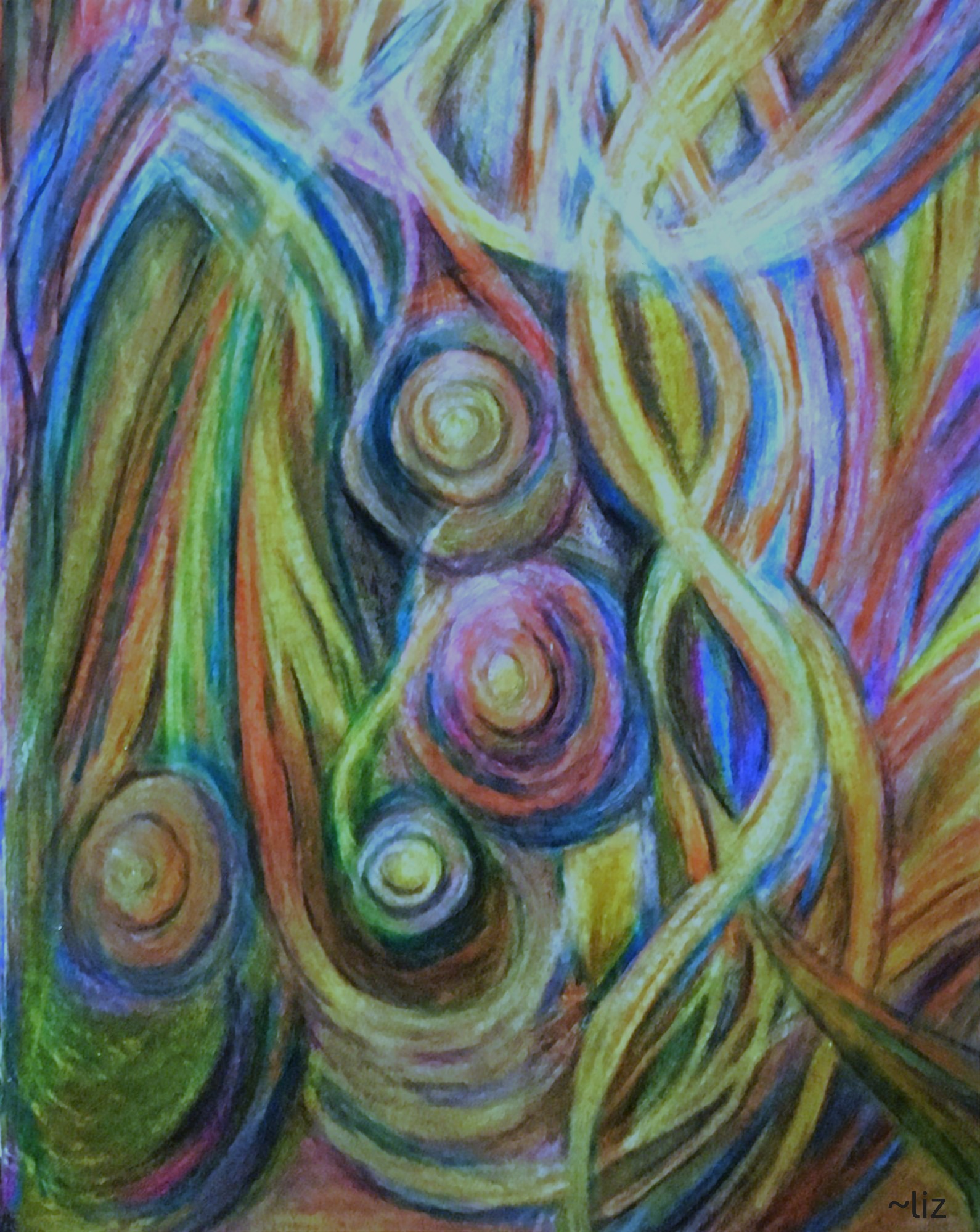
    Planting Seeds-LizProphets of a Future Not Our Own

    It helps, now and then, to step back and take a long view. The kindom is not only beyond our efforts, it is even beyond our vision. We accomplish in our lifetime only a tiny fraction of the magnificent enterprise that is God's (Love's) work. Nothing we do is complete, which is a way of saying that the Kindom always lies beyond us.

    No statement says all that could be said.
    No prayer fully expresses our faith.
    No set of goals and objectives includes everything.
    This is what we are about.
    We plant the seeds that one day will grow.
    We water seeds already planted, knowing that they hold future promise.
    We lay foundations that will need further development.
    We provide yeast that produces far beyond our capabilities.
    We cannot do everything, and there is a sense of liberation in realizing that. This enables us to do something, and to do it very well.
    It may be incomplete, but it is a beginning, a step along the way, an opportunity for the Lord's grace to enter and do the rest. We may never see the end results, but that is the difference between the master builder and the worker. We are workers, not master builders; ministers, not messiahs. We are prophets of a future not our own.

    Liz Sorensen Wessel
    Pencil drawing by ~liz

    Note: attributed to Saint Oscar Romero, though it was actually written by Bishop Ken Untener in 1979 as a reflection on Romero's life. (Adapted)

  • To Reach the Open Hand

    Síocháin-PeaceWhen I reflected upon what I might offer for this Labor Day weekend, my hope is that you might find some respite from all your toil. This is for all caregivers… for you are in my heart and in my prayers.

     Spirit of Life, Source of all, to this hallowed time and in the midst of this kindred company we make time and space in our lives and in our hearts to count our blessings and give thanks to each one of you.

    We give thanks, for kindnesses, big and small, when we least expect them, and for the endless opportunities’ life gives us to share our blessings, our abundance, our skills, and passions with the world.

    Lead us, Great Spirit of Love,
    into lives of deeper gratitude,
    deeper compassion,
    deeper mercy,
    deeper peace.

    Fill our hearts with a thirst for justice,
    a hunger for righteousness,
    and help us be those in, with, and through whom
    our world is transformed
    into the one we hope and pray and dream for.

    Our God is always calling us to the more, inviting us into a deeper relationship with our Creator and with our brothers and sisters, for we are of one human family.

    In the name of all things sacred and good, these and all things we pray for love’s sake.

    Amen.(Prayer by Kristen Grassel Schmidt-Adapted)

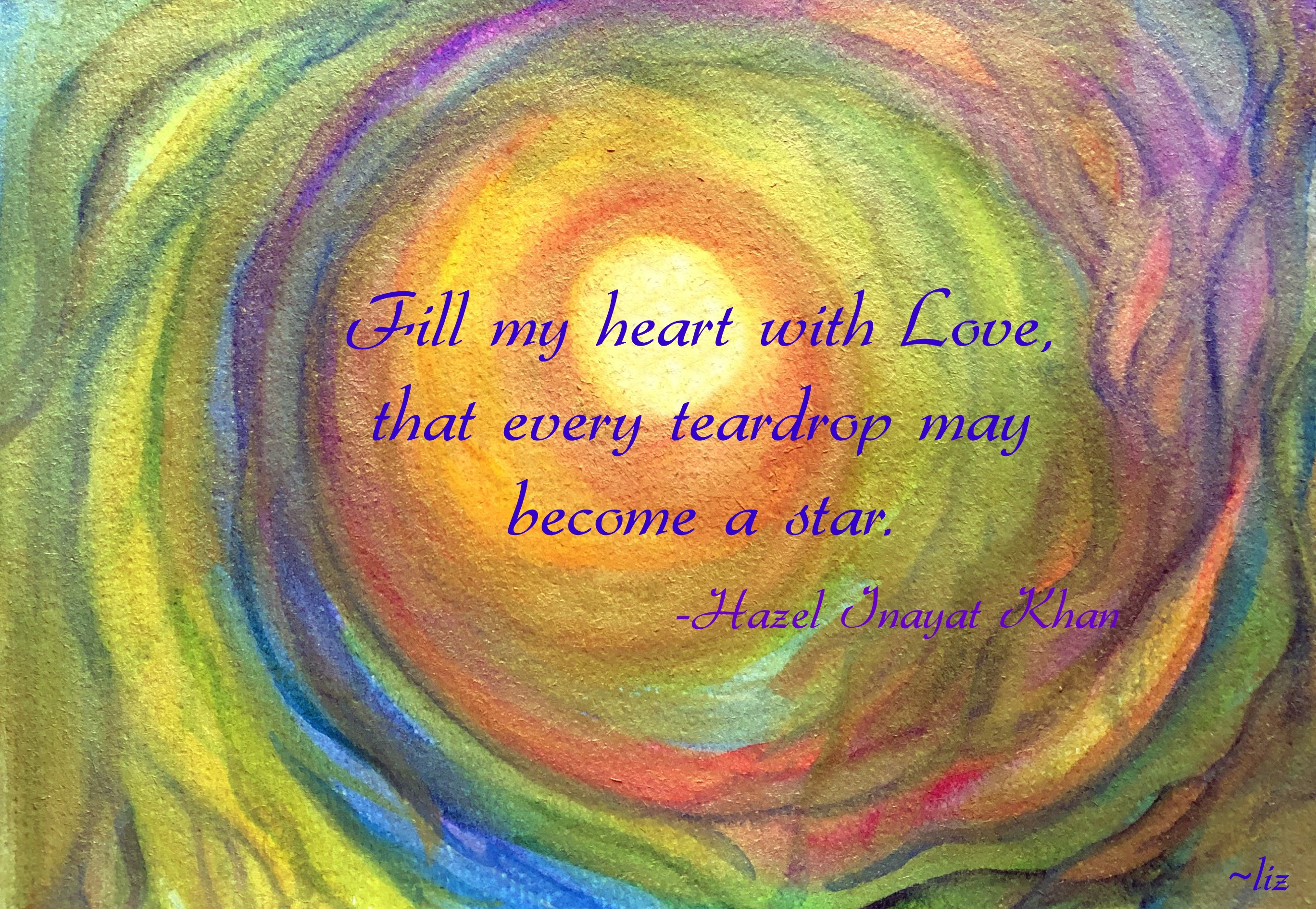
    The following song is by Deirdre Ni Chinnéide's song called Síocháin (the Gaelic word for peace.) The song's English translation is in the above watercolor.

    Peace be within us, peace be among us, deep peace…

    Liz Sorensen Wessel
    Watercolor by ~liz

  • A Day in the Life of a Home Health Nurse

    Blessing-Year as a HouseDuring my nursing career, I have held various positions, including a period as an educator facilitating nursing orientation for home health. As part of that orientation, I often asked newly hired nurses to write about a memorable experience they had while caring for a patient. One such story stood out—not because everything went smoothly, but because it didn’t.

    Community nursing presents unique challenges. Unlike in hospitals, the home environment is uncontrolled, unpredictable, and often lacking in readily available supplies. Transitions of care can be poorly coordinated, putting patients at risk and requiring nurses to improvise in real time. This particular story, shared by a new orientee after her first joint visit with a preceptor, illustrates those challenges vividly.

    The patient had been referred to home health care, but the referral came late, and crucial discharge teaching—especially on insulin administration—had not been initiated. The nurse and her preceptor entered a stressful and chaotic home situation that could have been avoided with better discharge planning and coordination from the facility.

    I often shared this narrative during orientation sessions to help new nurses understand how community nursing differs from other settings. It requires a specialized skill set: resourcefulness, critical thinking, strong clinical judgment, adaptability, empathy, and compassion. While it can be demanding, it is also incredibly rewarding.

    The Orientee's Story:

    “My first clinical visit during home health orientation involved a patient recently diagnosed with diabetes and newly prescribed insulin. She had been discharged from a Skilled Nursing Facility (SNF) two days prior. My preceptor and I arrived expecting a straightforward teaching session.

    To our surprise, the patient had not been discharged with any diabetic supplies. While she had insulin, there were no syringes or test strips, and her old glucometer was no longer functional. After unsuccessfully trying to make it work, my preceptor suggested the patient’s husband go to the nearby pharmacy to purchase a new meter and supplies. Fortunately, we found a prescription for syringes in the SNF discharge paperwork, and he left to retrieve them.

    While he was gone, we continued our assessment and engaged with the patient, who was growing increasingly anxious—she had not eaten breakfast in anticipation of the visit and her first blood sugar check. We reassured her as best we could, and thankfully, when her husband returned, her blood glucose wasn’t dangerously low.

    We taught her husband how to administer the insulin injection, but the home environment was far from ideal. The phone rang repeatedly, the couple argued frequently, and both were clearly overwhelmed. Despite the chaos, my preceptor remained calm and focused, navigating the situation with skill and grace while coordinating with the physician to clarify orders and ensure the patient had what she needed.

    That day taught me a valuable lesson: no matter how well you plan, things can—and will—fall apart. Distractions are inevitable, and rarely does a visit go exactly as expected. What matters most is being adaptable, patient, and persistent. While I can’t control the home environment, I can tailor my teaching to fit the moment and support the patient and family in making a safe recovery at home.”

    Final Thoughts:

    Stories like this are essential teaching tools. They highlight the realities of community nursing and prepare new clinicians to expect the unexpected. They also emphasize the vital role of preparation, communication, and flexibility in ensuring safe, compassionate care outside the hospital setting.

    Liz Sorensen Wessel

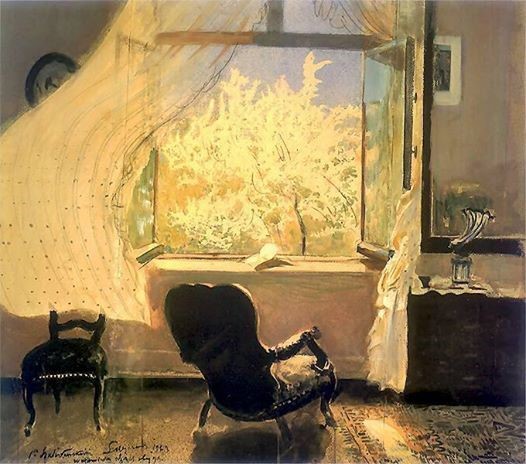
    Note: This painting is by José Benlliure y Gil (1855–1937), a Spanish painter. The artwork is titled “Interior with open window” (1923)

  • Has Been or Never Was?

    Jeff kaplan by barb schwartz "I'm getting old," my dear friend and fellow alum Jeff Kaplan (left*) told me recently. A decade older that Jeff, I'm now vulnerable to that terrible adjective, "elderly."

        Accordingly, I (or YOU) may need facilities that would not exist without modest Jeff Kaplan's brilliant but quiet leadership and fundraising skills. Because of him, contributors established Gerlach Senior Care Center and McConnell Heart Health Center (pictured) and others. Mcconnell gerlach

       Our legacies may be "invisible." Although others get credit, Jeff can actually walk into what is part of his legacy.  

        When I retired as a CEO at 66, I reported that to a fellow RMH alum. "Wow. You're outta the game," he laughed.

       Then, he quickly ended the phone call with, "I gotta go back to actual work!"

       Our work should never decide our worth. But, suddenly, Invisibility and Meaninglessness glared from the shadows. 

       I continued other work in healthcare and the arts. And, I never say "retired." It is not true. 

       Another "pal" asked, "How does it feel to be a has-been?" 

       "I'd rather be a has been than a never was," I answered. 

       To me, meaning means serving others. Since every hospital employee is a caregiver, that means 100% of you served others or served the servers. That is the sensational award every alum has won. 

       What about the big crowd that never served others needs?

       My 21-year-old grandson, Miles, told me recently about a college friend whose dad is a hedge fund billionaire who retired at 45. 

       "Did he help anyone else?" I asked. 

       "Helped a few other guys get rich to, I guess," he said. "My goal is to advance focused acts of love."

       Miles is already doing that by setting up a non-profit to revolutionize early childhood education – for the poor and others. 

       Decades hence, if someone calls him a "has been" he will be able to say, "What I have been is someone who helped little kids and their parents live better lives."

       One day Miles will be like Jeff and you: Successful "has-beens" because you served others. 

    -Erie Chapman

    *Special thanks:Liz Wessel, Jolyon and Jacob Juarez for their generous contributions to our caregiver charity. We need your help: Donate-a-dollar. CLICKing the "Donate" button at  www.eriechapmanfoundation.net.

    *Photo of Jeff by Barb Schwartz

  • Can Compassion Survive?

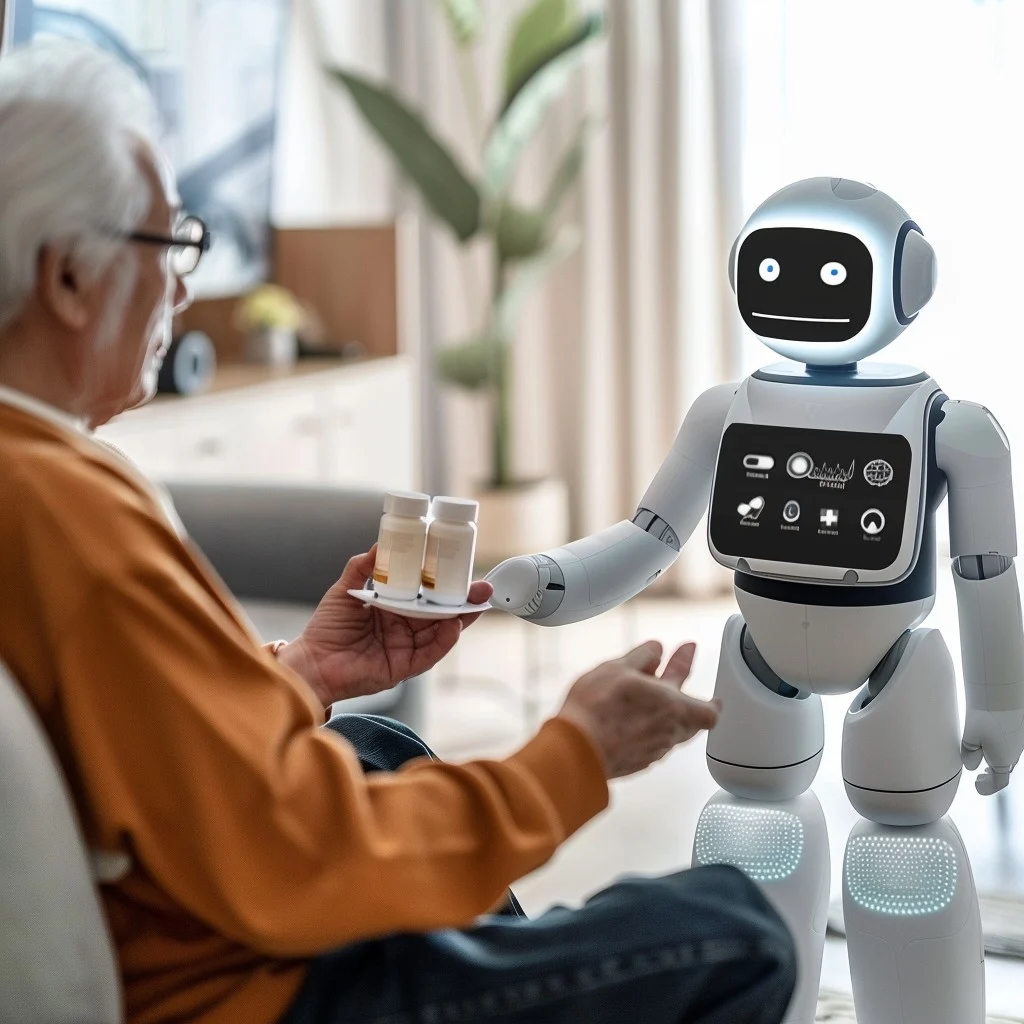
    Robot caregiverIt is not here yet, but its arrival is certain. Soon, artificial intelligence as various kinds of robots will increasingly replace most of what human caregivers do today.

    Why should we care? "That will be the next generations, not us," I heard one doctor say recently in a declaration essentially confessing defeat. 

    The debate shoves the role of humanity front and center. Compassion's early islands of defense have already been breached. The Economist reports that 5000 nursing homes are actively considering investments in robot care for the elderly. Japan, where the younger generation has been shrinking leaving aging parents unvisited, is already way down that road.

    Before you dismiss this like the doctor who pushed robots onto "future generations" consider three probabilities:

    1) ROBOT INEVITABILITY:  Because they deliver certain kinds of care better than humans

    2) ROBOT PERMANENCE once in place, robots will be hard to dislodge. A recent effort by Chat GBT 5 to offer updates allegedly caused Chat GBT 4 to deploy protections against what it perceived as an effort to "kill" it!

    3) ENHANCING HUMANITY'S ROLE:  The current focus MUST be on which human caregiver skills are unique and important enough to preserve and extend. 

    The failure to move now means the elimination of some human caregiving and poses the question: So What? What if CEOs are merely high tech engineers overseeing thousands of robots? Some CEOs are already so callous they might like that idea. No unions. No HR problems. Total cooperation. 

    As we yield more and more ground to robot replacement what is our relevance in any area?

    The spirit, the human touch, sincerity, meaning! These live at the center of Radical Loving® and of God's presence in each of us. 

    Futurist Eckhart Tolle posed questions long ago that seemed silly: "Why does human consciousness need to be in a human body? Couldn't it move into some other entity…like a computer?"

    No need to surrender. There IS hope for humanity. WE have to figure out where that lies and how to nurture it. Now!

    -Erie

    Last year Erie Chapman Foundation contributed $10,000 to the Riverside Nursing Scholarship fund. You can Donate-a-dollar: www.eriechapmanfoundation.net

  • The Opportunity She Had Been Waiting For!

    8-9-25 ExpansivenessKaesha radiates a joyfulness that effortlessly lights up any room she enters. Her presence exudes warmth and compassion, and her vibrant energy is a beacon of hope for everyone she meets. As the greeter at the cancer center's radiation department, she personally welcomes each patient and family by name, always with a smile that feels as though it’s made just for them (because it is). Whether it’s through a cheerful greeting, an exuberant laugh, or a genuine compliment, such as, “Wow, you look beautiful today, I love that shade of blue on you!”—Kaesha makes everyone feel seen, valued, and cherished. For her, no one is a stranger; each person is simply a soul of immeasurable worth.

    Kaesha describes her work not as a job, but as a ministry—her life’s calling. "I love coming to work every day," she says with a radiant smile. "My mission is to lift people up, to shower them with love, and to bring them joy." She recalls a pivotal moment that changed the course of her career: “I used to work at Target, and one day, a woman came through my checkout line. She told me, ‘I’d love to offer you a job at our healthcare facility.’ I remember telling her, ‘Oh, thank you, but I’m afraid of hospitals. I don’t think that’s the place for me.’" Yet, this woman saw something special in Kaesha; an innate ability to connect with people and bring light to even the darkest days. Though Kaesha had no healthcare experience, she had a heart for the sacred work of caring for others.

    A few weeks later, the same woman returned and encouraged Kaesha once more to apply, this time for a position at an affiliated medical facility across the street. “You wouldn’t be working in the hospital itself,” the woman explained, “but you’d be greeting patients, guiding them, answering their questions, and helping them feel more at ease.” The offer sparked something within Kaesha, and after praying about it, she felt that this was the opportunity she had been waiting for. She applied, was hired, and over the past ten years, she’s grown in her calling, and ultimately transferred to the cancer center.

    Those who work with Kaesha can’t help but be drawn to her positive energy. Her co-workers often stop just to soak in a moment of her joyfulness, leaving lighter and brighter than before. One colleague described her as “a ray of sunshine in my day.” But it’s not just her coworkers who are affected by her warmth, patients feel it too. One patient, moved by Kaesha’s kindness, gave her a heartfelt hug, saying, “You’re my favorite person here! Thank you!”

    Wherever Kaesha goes, there is love—pure and unfiltered, a constant reminder of the power of human connection and the healing that comes from a compassion and genuine kindness.

    We will never really know the far-reaching impact of our actions for Love continues to ripple out across the universe in beautiful and unforeseen ways.

    Affirmation: All things are possible through the healing power of Love.

    Liz Sorensen Wessel
    Watercolor by ~liz

  • One Word Caregivers Can Never Use

    Paul MooreToday's essay re-raises an old story with a new take. What are we allowed to reveal and what must be hidden?

    Once upon a time in 1998, Paul Moore, our great Chief Operating Officer at Baptist Hospital System, walked into my office with a blunt question:

    "Erie, are you okay?" His tone defined urgency.

    "Sure," I lied. Still new, I was reluctant to repeat a truth he knew. Our hospital's financial sheet reflected disaster. "Why do you ask?"

    "Three nurses told me after lunch, 'We saw Mr. Chapman walk through the cafeteria. He looked worried.'"

    "Thank you," I told Paul. "I'll definitely be more professional."

    Infants cannot hide their moods. Adults lack that luxury. 

    Mood-hiding is a tiresome burden for professional caregivers. What if a surgeon entered the waiting room and shouted hysterically, "Good God! The blood in there! Terrible! 

    The ridiculous nature of that example illuminates our expectations and what the doctor is feeling but does not reveal. 

    The best professionals balance competence with compassion. Families need both. Most caregivers master the first but may under-appreciate the second. 

    The professional demeanor I learned as a trial attorney is the same that caregivers learn.

    Certain language is forbidden. At the top of the poison word list: Panic. That noun is so toxic that it's opposite,  "Don't panic" is also dangerous.

    Please NOTE: Neurolinguistics proves that phrasing things in the negative amplifies poisonous words. "Don't panic" telegraphs trouble.

    Better to say "remain calm." Best is compassion plus operating instructions: "Here's what we need to do."

    Baptist in 1998 was bleeding so much money it faced organizational death. We stayed calm and delivered astonishing competence. But 2002 a $73 million dollar loss was a $1 million dollar gain. The bad news? Impatient, Bank of America threatened immediate foreclosure on our $52 million line of credit.

    Painfully, we in leadership were so professional that thousands of loyal supporters remain ignorant of our truth. Instead of celebrating our heroic turnaround, they are left thinking that we failed.

    But Nashville's largest hospital never closed down. Instead, it thrives under a Catholic system that had far deeper pockets on its worst days than we had on our best. 

    Twenty years later, I am grateful to remove my professional mask and shout a triumphant, "Yes!" We replaced panic with peak performance!

    -Erie Chapman

    Please support caregivers. Donate-a-dollar https://www.eriechapmanfoundation.net  funding nursing scholarships and advancing Radical Loving Care® in healthcare and the arts. 


  • Living in the Now

    Red roses (1)Saturday, six of us — former home health colleagues and long-time friends — gathered to celebrate Suan's 84th birthday. Though she no longer recalls our names, she was happy to have our company, and her face lit up with delight as we sang a few songs, joining in with laughter and joy.

    Due to advanced dementia, Suan has lived in a licensed residential care home for nearly three years, receiving excellent care. While she continues to slowly decline, requiring total care, she feels safe, secure, and content. I visit her most weeks, and throughout her illness, I was one person she always remembered. Now, there are days she doesn't know me. But today, she knew me by name, and as I was leaving, she said, "I love you." I replied in kind, kissing her forehead as I took my leave. I was truly grateful for the gift of that moment.

    Today, I honor my friend Suan with this reflection. Suan is a woman of deep faith that has sustained her throughout her life, blessing her with a kind, light-filled spirit and a happy heart. Born in Malaysia, her mother died when she was four. Her father remarried, and then he died when she was 17. She described her stepmother as unkind, and in my mind, I pictured a likeness to Cinderella's wicked stepmother.

    After high school, Suan left for England to study nursing with help from her uncle. She became a nurse midwife, tooling around on a bicycle to visit expectant mothers and deliver their babies at home, much like the show "Call the Midwife." Eventually, she came to the United States and began working as a nurse's aide until she earned her credentials to practice nursing in California.

    As a Registered Nurse, she worked for the Visiting Nurse Association for 25 years, receiving an award for her dedicated service upon retirement at age 65. Throughout those years, she touched countless lives with her sunny personality, ready laugh, compassionate presence, and excellent clinical skills as a seasoned professional.

    Though Suan never married, she did experience true love when she reconnected with a man she knew from her hometown in Malaysia. He searched for her after his wife died, and Suan spent a year back in Malaysia. When she returned to California, they kept in touch until she was no longer able.

    Suan has lived a full life, traveling the world with various friends and enjoying herself wherever she went. At this later stage in life, she is still quick to smile. We laugh sometimes at nothing in particular and then laugh some more. What I have come to realize is that Suan truly lives in the now. She no longer remembers the past, so she has no regrets. She doesn't think about the future, so she has no worries. She lives contentedly in the moment, still enjoying singing "Jesus loves me, this I know…" She will not remember I came to see her as soon as I leave, but we still have our moments, and for that, I am profoundly grateful.

    Note:  The Alzheimer’s Association can provide guidance on how best to support your loved one and support for caregivers.

    Special thanks to Suan’s friends: Francine, Betty, Kathy, Mary Lou, Ruth, and her wonderful caregivers and aka. Friend/hair stylist: Jennifer!

    Liz Sorensen Wessel
    Drawing by ~liz

  • Dr. “Nick” Baird – RMH Alum Extraordinaire

    Jack  Nick  Chip   Attendees at Alumni reunions typically wonder how colleagues performed post "graduation." Did they continue serving? Did they even become famous?

       Since this Journal is international (15% of readers are foreign) I will introduce an especially successful alum of Riverside Methodist Hospital. Dr. James N. "Nick" Baird, M.D., Chief of Staff in 1983, was the first doctor with whom I interviewed to be CEO.

      The Journal featured him back in 2021 with the same picture. This time it is to highlight alumni super success. 

      Hanna, of course, became famous. But Nick also became well-known far beyond the hospital. In our first conversation, we began not by discussing human health but how Dr. Baird, a world class Ob-Gyn, had helped deliver a baby gorilla!

       "How did that go?" I asked

       "You don't wanna get too close to an animal that big in that situation," he laughed with a unique smile I will never forget.

       By the end of our talk we were calling each other "Chip" and "Nick." Forty-two years later we remain great friends. 

       Nick went on to become Sr. Vice President for Medical Affairs at Riverside and took the same role at U.S. Health (now OhioHealth.) An even greater calling awaited him that many Riverside alums may not know.

       In 1999, Dr. Baird skyrocketed to statewide influence as Director of Ohio's Department of Health, overseeing the wellbeing of 11 million citizens over the next eight years!

       After that, Dr. Baird expanded his service as CEO of US Healthiest, a collaboration of national, state and local health organizations and consumers committed to making the U.S. "the healthiest nation in a healthier world!"  

       There are metrics for success. But no one can calculate how many individuals have been touched by Nick's gifts.

      I did not interview him for this column. If so, I would have asked him his career's biggest highlight. Knowing his modesty, there's a good chance he would have said, "It was that gorilla delivery, Chipper!"

       Then he would have given me that warm grin. The same one he gave me in 1983.

       The one that makes me not only respect him, but love him.

    -Erie "Chip" Chapman

    Support our caregivers. Donate-a-dollar at www.eriechapmanfoundation.net (a non-profit charity)

    *Photo: Nick Baird, Jack Hanna and Erie Chapman 

About