Thirty-five years ago I stood in front of the exit to the Jeep assembly plant in Toledo, Ohio with a Super 8 mm camera and a microphone. At the 3 o'clock shift change, I asked several workers leaving the plant to answer one question for the camera: What is the meaning of life? Years later, the Monty Python group made a film with the same entertaining name. The question, can be serious, random, or ridiculous.
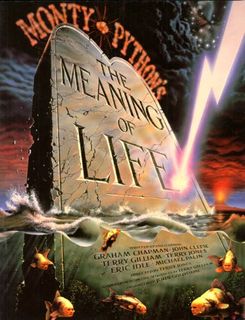
But the question about the meaning of our life is, perhaps, the central philosophical inquiry of civilization. No one ever finds an answer that will satisfy everyone. Last time I noticed, the census showed that there are about six billion of us currently occupying the planet. By mid-century, there may be as many as nine billion. It's a staggering number.
What is the meaning of the life of a tribal leader in northern Afghanistan or a tribal chief in the jungles of the Congo or a nursing supervisor at a thousand-bed hospital in New York? Some measure their life meaning by the amount of power they imagine they have over the lives of others?
What is the meaning of a life that is born into the neonatal intensive care unit and expires fifteen minutes later? Is that baby's life "meaning" measured by the amount of time lived, by the grief shown by parents, family, and nurses?
The powerful sometimes imagine their lives are more meaningful than the weak. The rich may think they matter more than the poor. The healthy sometimes act condescendingly toward the sick. Some 25-year-olds may believe their lives have more meaning than that of any 95-year old.
We can quickly say that every life has meaning. Every life has equal value. Every life is divine.
But, what is the meaning of the life of someone who lives their time on earth making the lives of others as miserable as possible? How do we assess the value of someone who abuses those around them including children, who murders, tortures, rapes? How do we assess the divine meaning of the life of someone we classify as "evil."
Thirty-five years ago, the workers leaving the Jeep plant gave mostly lovely answers. As they paused briefly at the microphone on an October afternoon, they mentioned family, friends and God. For me, the most entertaining answer came from a middle-aged man who said nothing. As he walked to his car, he simply raised his hands to the air and shrugged his shoulders.
That shoulder shrug is the answer so many give. Yet, people starving in Darfur at this moment probably aren't asking the "meaning" question. When we are reduced to struggling for food and water, questions about meaning seem like insults.
As you gaze about your day, encountering vulnerable people in the course of your caregiving, I wonder how you answer this question. Part of the trick in the inquiry is that I've perhaps created a false confusion between the meaning of life and its impact. Presidents and Prime Ministers may be in the position to have the most influence on the most people. But, you and I know that their lives have no more meaning than the life of the patient in the bed before us. When we are giving loving care, it doesn't matter if the person in need is a dying baby or a hardened criminal. Love sees need and seeks to heal it.
When we are vehicles of Love, everything has meaning. When we are not, nothing does.
-Erie Chapman


 Journal of Sacred Work
Leave a comment