"I saw a woman calling for help. She was buried up to her neck with only her head showing. The hands of children reached out from between huge pieces of concrete." – An eyewitness in Port-au-Prince, Haiti speaking on CNN.
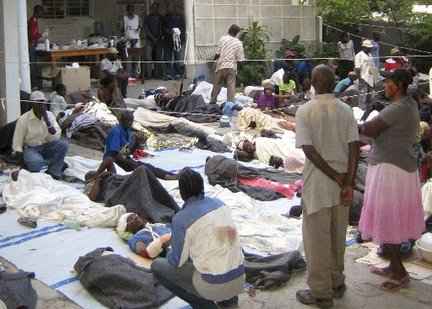 Tragedy falls unevenly and never fairly across the face of this world.
The surreal images from Haiti are beyond tragic. There's no point in trying to make sense of them. But, it's hard not to try.
What a cruel irony. One of the biggest earthquakes to strike this hemisphere in more than two centuries chose the poorest country on this side of the world as its target. The quake cracked open the capital city drowning tens of thousands in its jaws.
No one needs to create pictures of hell. All anyone need do is to take a look at life on this island nation before this disaster. Haiti is a frequent location for mission trips. Caregivers from around the world come to the country bringing medical help with loving care. Yet, the mostly illiterate population often lack the means to sustain any long term benefits after the mission team departs.
In the wake of this new nightmare, teams of caregivers are flooding into Port-au-Prince as fast as the over-taxed airport will allow. Once they arrive, they are confronted with the enormity of caring for critically injured people in a setting where one of the hospitals has already collapsed (as has a prison.) Even the presidential palace is in ruins.
Caregiving in a setting like this can dwarf, at least temporarily, the stresses of working in a typical, well-equipped, well organized American hospital. How do you care for a woman who is trapped up to her head? How do you care for a child whose hand reaches out from a place he may never escape? How many people are still, at this moment, calling faintly for help from beneath the rubble?
Wide-ranging emergencies challenge the best abilities of the most capable caregivers – not just doctors and nurses and chaplains but firefighters and police and construction workers manning bulldozers. Beyond the trained, however, are the legions of other people who step forward to lift, to encourage, and to love.
Amid the panic, Love calls all who are able to reach out to all who are suddenly disabled. Some will ignore this call and run, perhaps understandably, to save their own lives. Others will risk personal safety to bring what healing they can to the newly vulnerable.
What is the value of prayer amid all of this? Perhaps, one benefit for all of us is that prayer can help us transcend the terror of any tragedy. God's Love is always present, even during death and destruction.
As Mother Theresa once observed, the question is not, Why would God allow tragedy? The question is, Why don't more people step forward to help?
After the rubble is cleared away, this question will remain.
-Erie Chapman


 Journal of Sacred Work
Leave a comment