If one hundred percent of Americans adopted the Adventist lifestyle, this nation would have a dramatic increase in its overall health. Note that I am not preaching a conversion to Adventist belief. That is, of course, a personal religious decision.
 It is the Adventist lifestyle that makes the one million or so Adventists among the healthiest, most long-lived people in the world. We all know they've got the right idea. But, they, as opposed to most of us, actually live their beliefs.
Healthcare professionals also know the extraordinary impact this relatively small Christian denomination has had on medical excellence. Their flagship hospitals, including Loma Linda in California and Florida Hospital in Orlando have made a significant impact on hospital-based care.
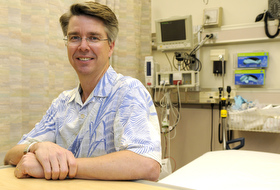
Kevin Roberts (above left) the talented and committed CEO of Castle Medical Center in Hawaii, an Adventist hospital, understands that loving leadership is about the right mix of competence and compassion. He practices that balance as a hospital president and his staff and their patients benefit. The same is true of Des Cummins, CEO of Florida Hospital.
"You don't have to choose between competence and compassion," says a physician at the Adventist's Kettering Hospital in Dayton. "You should expect both in your medical care.
What is so magical about the Adventist lifestyle? Nothing. They practice health behaviors that all of us know: regular exercise, vegetarianism, no smoking or drinking, a sense of community, and a hopeful view of life.
A key for them is not their behavior but what undergirds it – it is a deep belief in the sacredness of the human body and the holiness that guides caregivers who touch the bodies of others. This is what each of us needs to learn in our own way.
Caregivers are in desperate need of positive self-care. Nurses know they should exercise, but many smoke, are overweight, and are flooded with stress. Doctors know the impact of food on health but many, like ER doctors on the run and even some cardiologists I know, ingest some of the worst fast food and ignore the exercise approach they advocate for their patients.
This is not about condemning bad lifestyles. It is about how much impact a positve lifestyle can have on each of us – especially on caregivers.
Thus far, I have written nothing that is going to change the life of any reader. What changes people is not advice but a personal decision. These decisions will affect the quality, and probably the length, of your life. None of us will make this decision unless we feel a sense of personal awakening – a deep passion to set health care goals for ourselves, to meet them, and to make them a lifelong practice.
A few years ago, after an adulthood of very moderate drinking, I realized I had started to drink too much. As soon as I cut back significantly, I not only lost weight, I felt better.
Of course, I already knew this would be true. What was missing was my awareness of the mistake I was making together with acceptance that I needed to prioritize this change followed by engaging a new life practice every day. The same came true with exercise. I do about twice as much as I used to. Of course, I feel better.
Not all of this is self interest. It is about honoring the body I have been given and the fact that this body is now more than sixty-six years old.
What are we doing, as caregivers, to care for our bodies? How does this self-care affect the way in which we care for others?
The Adventists have learned not only a healthy way to live, but how to sustain their healthy practices. They act not out of fear, but out of Love. I admire them. Wouldn't it be wise for all of us to follow their example?
-Rev. Erie Chapman


 Journal of Sacred Work
Leave a comment