Journal of Sacred Work

Caregivers have superpowers! Radical Loving Care illuminates the divine truth that caregiving is not just a job. It is Sacred Work.

About

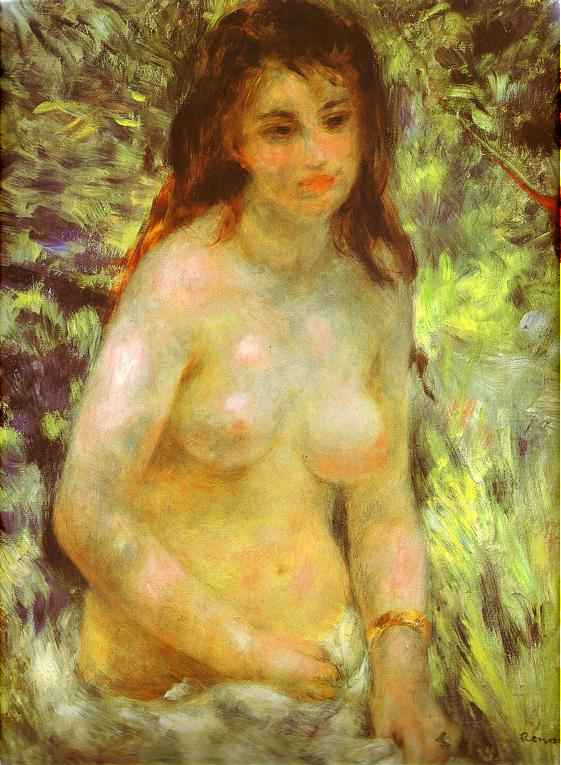
Renoir Nude
   On the last morning of his life, renown impressionist painter Pierre Renoir said, "I think I'm beginning to know something about painting." In his seventy-eight years, Renoir (1841-1919) created more than four thousand finished works. Among them are some of the most gorgeous creations ever seen.

   In his final hours, instead of crowing about his astounding artistic accomplishments, Renoir recognized that he was still "a beginner." In his humility, he always knew that his best work had not come from him, but through him.

   All who of us who struggle to help others through caring or through creating enter an intimate mystery. If we persist in our quest and never give up (except to God), we will gain glimpses of Love.

   At the beginning of our lives, we enter our own personal mystery. Along the way, each of us is invited to travel deeper into this mystery. Many turn down their invitation very early. The most successful among us, particularly saints, healers, and other exceptional performers (along with millions we have never heard of) have experienced many sacred encounters. 

   Like explorers, the best of us have gone on a hard and dangerous journey into unchartered lands. Upon returning, these "explorers" try, through art, literature, song or science, to describe to us what they have "found." The great scientists or inventors create theories or show us discoveries that may change the world.

   We need to celebrate these great gifts as coming from the holy, not from the person.

   Why are Renoir's paintings (like the nude, above) considered so exceptional? Renoir himself said that great art is "inimitable and indescribable."

   No wonder words fail us. How can even the most eloquent among us describe the peaks of our climactic passion or the shattering darkness of our pain? 

   The sacred is a spiritual encounter, not an analytical thought. If we sustain our curiosity and keep trying, as do the finest artists and scientists, the door will crack open for some ecstatic moments.

   The strangest part of the adventure into sacred mystery is the paradoxical balance. We are required to engage both hard work and complete surrender. If "success" comes through hard work, why, we ask, are supposed to "surrender?"

   Loving caregivers know the answer. They know Love comes when we combine skilled effort with compassion, knowing all along that this prepares the pathway for God's healing grace.

   The world calls us to work. When our work is informed by God, it becomes transcendent, whether or not the world notices.

   There is no "trick" to finding God. We all know, or at least sense, our role. When we answer our calling to be caregivers, we begin to align our energy with God's Love. 

   As we work to fulfill our calling, we are already living this Love. Love is always waiting to enter our hearts. But, it can only come through the door of humility.

   Failure comes exclusively to those who give up, closing their hearts to God. None of us can truly succeed without engaging Love's energy.

  Age and an agonizing case of arthritis did not cause Renoir to quit living his life's invitation. Instead, he had his paint brushes bound to his hands so he could continue to express the creative energy that ran through him. 

   Renoir's hard work and humility enabled him to paint Love's truth during his career. He saw this truth again with particular clarity on the last day of his life.

-Rev. Erie Chapman 

Posted in

7 responses to “Days 223-225 – Mystery & Humility”

  1. Victoria Facey Avatar
    Victoria Facey

    From what I’ve just learned about Renoir is that he was truly passionate about Art, his vision and painting. To have his paint brushes affixed to his hands, despite his arthritis shows this and reminds us that he still had gifts to give.
    Erie, I’m not a clinical caregiver, but I have come to appreciate and understand them more and their work since joining the Journal of Sacred Works community. There is always a lesson to learn, a memory to share and a bit of wisdom to take away from your reflections. Thank you…

    Like

  2. ~liz Wessel Avatar

    I can appreciate the idea of approaching life, our work, art with a beginners mind. A few years ago, I co-facilitated a Lenten meditation group. I was attempting to bestow knowledge to others providing them with instructional tips…as if somehow, I was “in the know” (or perhaps trying to portray a sense of that, my first time teaching meditation). Then Fr. Jim Farris (co-facilitator) offered a profound insight when he encouraged us to meditate with a beginners mind. Chazam, pow, wow, that brought me out of my head and back into my heart as a little joy sprung from within…
    Reading your comment, “So many turn down the invitation at an early age” saddens me when I think of others. Also, because I am reminded of how safe I have tried to live. Yet, to follow our calling requires risks. Reading further and reflecting on your crystal revelations, I feel hopeful. Hopeful that I can open to the truth of Love’s call…and better yet,to “start where you are” (Pema Chodron).
    Thank you for sharing glimpses of Love’s divine mystery and beauty.

    Like

  3. Yvonne Ginez-Gonzales Avatar
    Yvonne Ginez-Gonzales

    Hello fellow journal contributers…it has been a while since I have posted anything – but the little something called life and work seem to capture all my time. Yet, even as I sit here and type this, there is this rationalization going on in my head that is saying “but this only takes a few minutes to type a few words.” Not sure how to answer the voice. Anyhow, I do have to confess that I have continued to read the journal about 3 times week, especially on Saturday, to read what my dear preceptor (Liz)from not so long ago has written for us. I hope this does not sound selfish of me to only read and not post something; but I feel that I should share that your journal does provide for me a sense of connection with the group. So forgive my absenteeism. Thank you Erie for the beautiful comparison above – it really touched my heart.

    Like

  4. Marily Avatar

    It is truly a pleasure to come and stop by. Your shared reflections keeps mine deeply meaningful too. It is amazing how we can enter into each others’ lives and be blessed. Though there are times that we missed to fully master the gifts we can have and share… perhaps it is because we forget to brace our minds that by ourselves we can do nothing… it is only through His grace that suffices.

    Like

  5. xavier espinosa Avatar

    A few years ago as the expansion of the hospital where I was once employed began, the beautiful tall beech trees that dotted the park that extended beyond the north wing that housed the ICU and CCU, the psychiatric unit and the maternity wing needed to be cut down. The grounds keepers had chopped the trunks into two foot tall logs and had left them out to be picked up. As I passed the lawn on the way to the parking garage I thought about all the prayers, all the dreams, all the hopes and all the souls that had whispered through the leaves and passed through the bodies of the trees that lay now scattered over the landscape. I stopped and lifted one of the rather heavy pieces of the trees’ remnants and lugged it towards my car. Along the way one of the physicians I worked with stopped and asked me what I was doing with the piece of wood. When I told him of my thoughts, he too went over and chose a trunk for himself.
    From time to time in facilitating a program, if the spirit was among the attendees, I would ask them to look at their hands, then look at their neighbors hands and to think of the lives that had passed through them. In paying respect to the experiences, the memories, the part that we as caregivers play in the evolution of life, of the realization of dreams, in the sadness of loss, in the disappointment of unfulfilled hopes. we become part of the sacred. The Japanese have a term “aware” (ah wah ray) which means the beauty that lies within the sorrow. In seeing how our reverence for life is manifested in the extending of our hands, the connection of our gaze, the warmth of our touch we continue on the path to wisdom. We become like the trunk of the tree that sits in my home- a bold tribute to the sacredness that we maintain in the beauty of our work, in the artistry of healing, in the fulfillment of being stewards of the sacred.

    Like

  6. erie chapman Avatar
    erie chapman

    Thanks to each of you for your active participation in the Journal. You may know that whenever you comment, your contributions help many more people feel encouraged.
    Xavier, I was really struck by several lines in your comment including this one: “The Japanese have a term “aware” (ah wah ray) which means the beauty that lies within the sorrow.” May we see not only the beauty in sorrow but the sorrow in beauty – a challenging parallel but one that also teaches the sacredness you eloquently described.

    Like

  7. Karen York Avatar
    Karen York

    Your eloquence becomes more luminous with each reading Erie. I am struck by the “simple” idea that the sacred is a spiritual encounter not an analytical thought. I forget all too often that I am a being and not a doing and to really really live my calling, I must invest my life in living love and not fear. Blessings to you.

    Like

Leave a comment