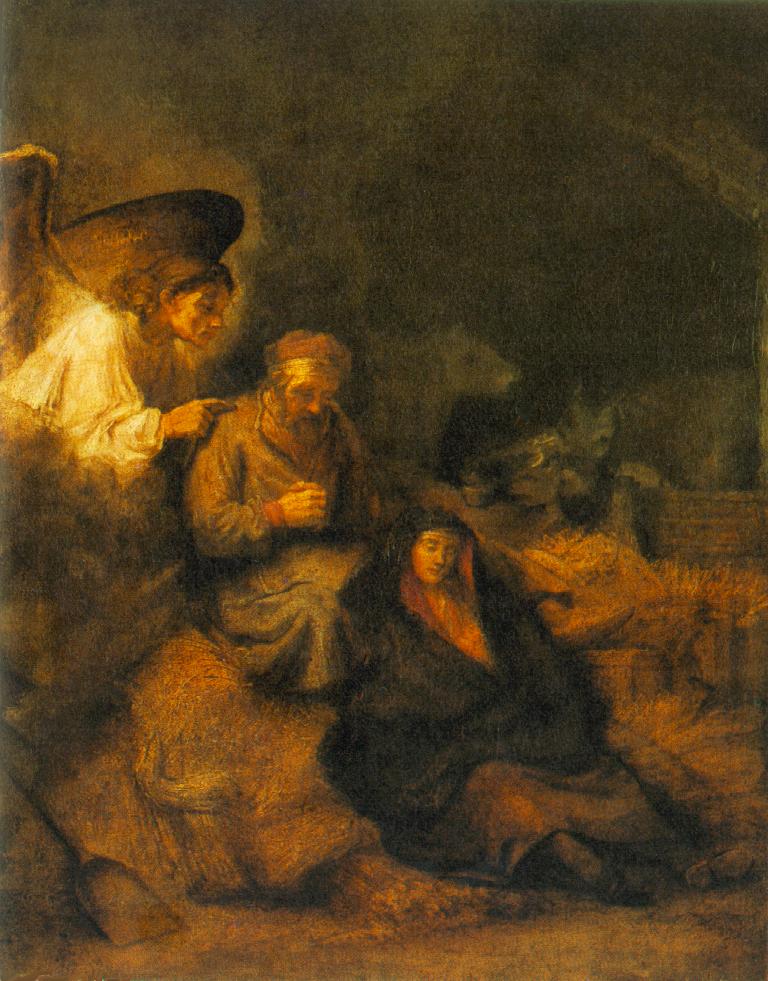
Now I pierce the darkness, new beings appear,
The earth recedes from me into the night,
I saw that it was beautiful, and I see that what is not the
earth is beautiful.
-Walt Whitman (Leaves of Grass – begun in 1855, completed in 1891 – Painting – Dream of Joseph, by Rembrandt)
We are so locked to the everyday consciousness of the world that I wonder how much we attend to the dreams we so often experience. Caregivers are present when patients enter so many different states of consciousness. If you have ever been under an anesthetic and retain some memory of that, you will know what I mean. Even anesthetics as common as nitrous oxide can create strange images, lifting us out of the dentist's chair and into another world (which is typically a lot better than any dentist's office!)
When my wife was recovering from anesthesia after a procedure a few years back she referred to the nurses around her as angels and continued to address them in this grateful, if dreamy, way for many minutes. When I was under anesthesia myself, recently, I remember marveling at the extraordinary skill of the two caregivers working on me. How could they move their hands so skillfully? I wondered. I, at that stage of consciousness, could not have performed the simplest of gestures.
How should we attend to our dreams and what can they tell us as caregivers? Perhaps the most important thing is for us to respect what our dreams tell us rather than to dismiss them as we so often do.
Our dreams remind us of the varied states of consciousness our spirits inhabit. In dreams, and in other altered states, our bodies can fly, we exist in multiple places at the same time, we can visit other eras, and we may engage in behavior unimaginable to our everyday lives. All of this tells us that we will all occupy another consciousness some day and it is likely to be far beyond anything we imagine.
Meanwhile, caregivers are privileged to attend to people who may be in a very different state at this moment. This is why recovery room nurses are encouraged to speak to unconscious patients as if they were conscious. It is also why we need to address the elderly, stroke victims, and babies as if they understood us. At some level, what all beings know is whether they are in the presence of love's light. This is the eternal dream for all of us.
How do your dreams and dreaming inform your everyday life?
-Erie Chapman


 Journal of Sacred Work
Leave a reply to ~liz Wessel Cancel reply