Journal of Sacred Work

Caregivers have superpowers! Radical Loving Care illuminates the divine truth that caregiving is not just a job. It is Sacred Work.

About

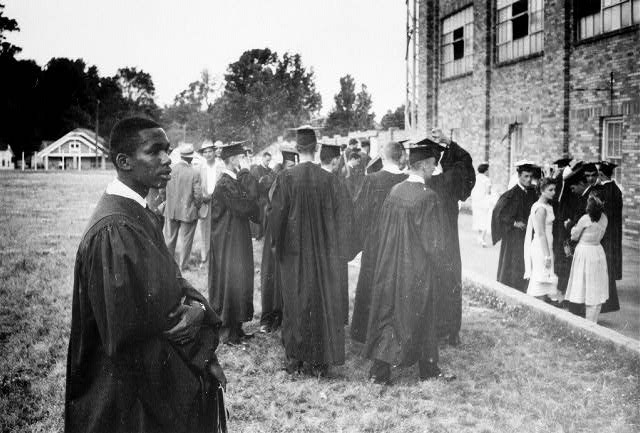
Ernest_green2_f[Ernest Green, 1958, being rejected by white classmates at Little Rock's Central High School after becoming its first black graduate.]

   Where are we first accepted…or not? Hopefully, it's in our mother's arms. Our mothers are the first ones who have the chance to love us. After that, our lives will always be places where, however kind and loving we are, we will occasionally encounter rejection.
   Patients come to hospitals for cures. They also come for loving care, which they may or may not receive. What if the patient is homeless, alcoholic or weighs four hundred pounds? Will they truly encounter acceptance?
   Charities were established for people who could find no acceptance elsewhere. In Nashville, for example, Oasis cares for teenagers exiled from home; Magdalene cares for prostitutes seeking recovery; The Next Door looks after woman leaving prison; and First Steps cares for infants and children with severe life challenges.
   Most of us are tempted to turn away from people who look or behave differently from what we prefer. Charities, grounded in Love, are charged to accept the "untouchables" in our society because the rest of us have either failed to live Love or because we lack the skills needed for curing.
   I grew up thinking that Christian churches, established as models of beloved communities, would accept anyone. I soon learned how tragically wrong I was.
   As late as the 1960s, some white churches in the south, were turning away human beings who happened to have been born with darker skins. The photograph of Ernest Green being shunned by fellow students as the first black graduate of Little Rock's Central High School highlights the power of rejection and the poison of blind hatred.

   To this day, many churches turn their backs on those who live a gay lifestyle. Many Southern Baptist Churches and many other religious denominations refuse to ordain women. The Catholic Church, as a whole, refuses communion to non-Catholics. Would Jesus refuse communion to you or me? To my Jewish or Muslim or Hindu or atheist friends who sought to share God's Love in this way?
   What exactly is it that we need to do to gain acceptance in this life? What is the membership test beyond being human? Where are the places that not only speak Love but offer it with no conditions? Do such places exist?

   The choice for America's charities is be places staffed by people who understand how to evaluate and treat, not judge and discriminate. The challenge for caregivers is to learn the difference between diagnosis and judgmental thinking. These answers are found by living Love.
   What do you think?

-Erie Chapman

Posted in

3 responses to “Days 12 & 13 – Places of Acceptance?”

  1. ~liz Wessel Avatar
    ~liz Wessel

    For me, today’s meditation is poignant and quite heart wrenching to read. It is bound to evoke strong emotions as it reveals some uncomfortable realities and biases. Personally, I don’t know of anything more painful than rejection. As people look through a lens of separation, fear of differences creates barriers. How easy it becomes to condemn another, or to judge someone who we see as a stranger, or as an enemy. Yet, Jesus said, “Judge not lest ye be judged! Let he who is without sin cast the first stone.” Matthew 7:1. How vulnerable it can be to open our hearts and minds and recognize each person as our brother or sister. Love opens our eyes to understand we are members of One family.
    Religion is inclusive of people with similar beliefs and creates a community of fellowship where people can worship together, but danger lies in the exclusion of others. Ideally, in healthcare we respect and honor people of all faiths, cultures, lifestyles, and gender preferences, as we recognize each persons inherent worth as a human being. I believe all are welcome at the Lord’s Table and I know Jesus would never turn anyone away.

    Like

  2. Victoria Facey Avatar
    Victoria Facey

    The bible reads God made Man in his own image; that says it all. If only those with narrow minds and eyes would remember this each time they encounter another person…

    Like

  3. ~liz Wessel Avatar
    ~liz Wessel

    I received an e-mail correspondence from a friend who shared insightful comments with me after reading this meditation. Here is an excerpt, as I thought her contemplations well worth sharing with you. Her reflections are based on teachings from a Course in Miracles.
    “Acceptance of the creative power of the mind and the responsibility that goes along with it gives me hope on the one hand and overwhelm on the other. It says that, “what we do” comes from what “we think” again putting the mind as the only place where change can occur
    So- everything I think is creating on some level and over and over it says it is a course in thought reversal. Reversing cause and effect. My thoughts are the cause and the world I experience is the effect. Not the other way around. I don’t so much react to what I experience as create it. It also says don’t try to change the world but change your mind about it.
    How this relates to the journal topic—If the goal of the course is peace, and that will happen through complete forgiveness, and that will happen in the holy instant {the now moment , no past, no future,} and that will happen when we identify with our spirit not the ego, I guess you can only feel rejected if you are identified with the ego. Ego being the belief in separate Identities and Spirit the knowledge of One indivisible Whole. We will never be able to fix things from the outside in through war, biomedicine, causes of all sorts; it will only come from transformation from the inside out.
    In the meantime, we participate in the drama and work on our interiors.
    After a few years here fumbling around in the dark, looking at the outsides of things, wringing my hands, and graying my hair I am returning to the place where it all makes sense, inside out — trying to quiet the internal big mouth so that I can hear that voice. But unlike the first half of my life I will be less insistent that others should follow its directives and be more diligent in acting on its direction in my own life?”

    Like

Leave a reply to Victoria Facey Cancel reply