Journal of Sacred Work

Caregivers have superpowers! Radical Loving Care illuminates the divine truth that caregiving is not just a job. It is Sacred Work.

About

[Below is another terrific column suggested to the Journal by nurse Liz Wessel]

Listening Is Powerful Medicine

Listen
Now
[5 min 6 sec]

“Listening to someone's story costs less than
expensive diagnostic testing but is key to healing and diagnosis.” – Alicia Conill, M.D.
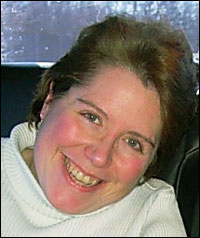
 
Alicia Conill

Courtesy Alicia Conill

Dr. Alicia Conill is a clinical associate professor at the
University of Pennsylvania School of Medicine. A native of Cuba, Conill also
directs a nonprofit that teaches patients and caregivers how to better cope with
chronic illness and disability.

Weekend Edition
Sunday
,
February 1, 2009 · I believe
listening is powerful medicine.

Studies have shown it takes a physician about 18 seconds to interrupt a
patient after he begins talking.

It was Sunday. I had one last patient to see. I approached her room in a
hurry and stood at the doorway. She was an older woman, sitting at the edge of
the bed, struggling to put socks on her swollen feet. I crossed the threshold,
spoke quickly to the nurse, scanned her chart noting she was in stable
condition. I was almost in the clear.

I leaned on the bedrail looking down at her. She asked if I could help put on
her socks. Instead, I launched into a monologue that went something like this:
"How are you feeling? Your sugars and blood pressure were high but they're
better today. The nurse mentioned you're anxious to see your son who's visiting
you today. It's nice to have family visit from far away. I bet you really look
forward to seeing him."

She stopped me with a stern, authoritative voice. "Sit down, doctor. This is
my story, not your story."

I was surprised and embarrassed. I sat down. I helped her with the socks. She
began to tell me that her only son lived around the corner from her, but she had
not seen him in five years. She believed that the stress of this contributed
greatly to her health problems. After hearing her story and putting on her
socks, I asked if there was anything else I could do for her. She shook her head
no and smiled. All she wanted me to do was to listen.

Each story is different. Some are detailed; others are vague. Some have a
beginning, middle and end. Others wander without a clear conclusion. Some are
true; others not. Yet all those things do not really matter. What matters to the
storyteller is that the story is heard — without interruption, assumption or
judgment.

Listening to someone's story costs less than expensive diagnostic testing but
is key to healing and diagnosis.

I often thought of what that woman taught me, and I reminded myself of the
importance of stopping, sitting down and truly listening. And, not long after,
in an unexpected twist, I became the patient, with a diagnosis of multiple
sclerosis at age 31. Now, 20 years later, I sit all the time — in a
wheelchair.

For as long as I could, I continued to see patients from my chair, but I had
to resign when my hands were affected. I still teach med students and other
health care professionals, but now from the perspective of physician and
patient.

I tell them I believe in the power of listening. I tell them I know firsthand
that immeasurable healing takes place within me when someone stops, sits down
and listens to my story.

Independently produced for Weekend Edition Sunday by Jay Allison
and Dan Gediman with John Gregory and Viki Merrick.

Posted in

6 responses to “Days 37-39 – A Listening Caregiver”

  1. ~liz Wessel Avatar
    ~liz Wessel

    Thank you for choosing to share this physician’s enlightening story with fellow caregivers. It seems to me that listening is the most precious gift we can offer another human being.
    Last night I met with a small group of women as we began our journey of reading a book “Crucial Conversations” together. We each shared some of our stories within a sacred healing circle. As our evening unfolded Alexis shared a recent phenomenal story involving her husband Dan, a social worker, at a local hospital. Apparently, an Iranian man who suffered a stroke was hospitalized and he had significant residual deficits from the CVA. His speech was very slow and it was very difficult to understand him. Each day Dan visited this man and tried to listen to his story. The man had no family and he had a court appointed conservator overseeing his care for the past eight years. Repeatedly this man kept saying he wanted to go home to Iran and be with his family. One day Dan asked a dietician who spoke Farsi to speak to this patient and try to better understand what he was trying to communicate. The man was able to provide the name of a relative. Dan immediately went to the computer to do a search and was able to locate a person by that name in Iran. He then contacted the gentleman’s conservator to get permission to call the potential relative. He was told again by the conservator that there was no family but if he wished to pursue calling it was okay. It turns out this was a relative of the patient! The patient was a very learned man and he had lots of family. His family was very excited to hear he was alive and they were eager to care for him. Also, he had a son in California who had previously tried to find his father but he gave up looking when he was erroneously informed his father had died. As soon as the son was contacted he came directly to the hospital for a beautiful reunion.
    Many did not have ears to listen, but one person listened with divine Love!

    Like

  2. Carolyn Olney Avatar

    thanks so much Liz for this story, and the story of the physician. May our reform of health care allow us to have time for listening to the patient.

    Like

  3. Victoria Facey Avatar
    Victoria Facey

    This is truly the first time I stopped in some time to read such a story to stop me in my tracks. It takes a lot to share the details of Dr. Conill’s story that takes these twists and turns and then ends with such a powerful, personal reflection. I believe now that it means so much more to stop and be a sounding board to someone. Lord knows I’m always sounding off; it’s time to sincerely support and give back.

    Like

  4. Victoria Facey Avatar
    Victoria Facey

    This is truly the first time I stopped in some time to read such a story to stop me in my tracks. It takes a lot to share the details of Dr. Conill’s story that takes these twists and turns and then ends with such a powerful, personal reflection. I believe now that it means so much more to stop and be a sounding board to someone. Lord knows I’m always sounding off; it’s time to sincerely support and give back.
    Liz, as I read on to see your post, , my eyes watered in praise of caregivers like Dan, who really listen and persevere to extend care. How nice to hear the depth of the drive of the patient, Dan, and the best part – the outcome…V.

    Like

  5. Diana Gallaher Avatar
    Diana Gallaher

    “The first responsibility of love is to listen.” — Paul Tillich. I have this hanging on my office wall as a reminder when I am on the phone with clients what I am doing – I am to listen and I am to love. I’ve learned that I have to set aside my own agenda, however important it may be, to listen. And I’ve learned that I need practice in listening – every day. I’ve learned that I am a much better helper, loving caregiver, when I understand because I listened.

    Like

  6. ~liz Wessel Avatar
    ~liz Wessel

    Day 38
    As I reflect further on Dr.Conill’s story, the following thoughts come to mind. First, one of our most basic human needs is to be understood, how better to understand another human being than to listen? Second, we need to learn not to project our preconceived notions of what a person needs onto them. When we listen, we can meet a person where they are (not where we are) to discover their world.
    Soon healthcare reimbursement will be based on patient outcomes. This catalyst for change will require new and innovative ideas to emerge. In many ways, I find this very exciting. In homecare, we often encounter people with chronic illness and often long standing lifestyle choices prevent progress towards achieving positive health outcomes. After a while, I think clinicians begin to lose heart and start just going though the motions without their interventions effecting any real change. We need to learn new skills; new ways of communicating that can actually foster honoring human dignity. The crucial ingredient is listening rather than imposing all the “you need to do this and you should stop doing that.” Once we begin understand what is important to the person, what it is they are hoping for, we can use inquiry to help guide and empower the person to decide what they are willing to do or change to improve the quality of their life. Together as partners we can engage, encourage, and coach the person to change behavior. This also requires caregivers to awaken and to change practice. Currently, healthcare programs implementing these strategies coupled with technology and evidenced based practice are reporting incredible successes.

    Like

Leave a comment