"We should not feel embarrassed by our difficulties, only by our failure to grow anything beautiful from them." – Alain De Botton
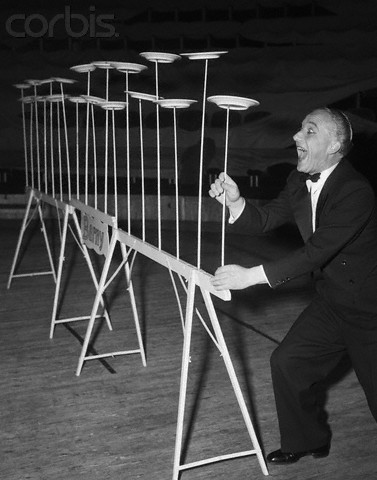 There are days as a caregiver when my life feels like a scene from the variety shows on TV in the late 1950s – plates perched precariously atop separate poles, lined up in a row, with someone running carefully but in a quietly frantic way from one to another to another working hard to keep them spinning fast enough to stay on their perches. The really good practitioners could successfully get them all spinning and then take them back down, one by one. My memory is that there were very few really good practitioners – inevitably at least one dish crashed to the floor.
Have you ever felt that frantic hope that you can keep the dishes spinning? And maybe you’ve felt the deep disappointment or shame when one falls. At the very least is the exhaustion that comes from trying so hard to keep balanced these things we call work, life, and self.
David Whyte makes a compelling argument that much of our exhaustion comes from attempts to manage what are, in essence, three separate, lifelong commitments. He refers to these commitments as marriages: the marriage that is in a relationship with another, the marriage that is to our vocation/avocation, and the marriage or commitment we seek to make to ourselves, that elusive thing we call “self.” Our struggle comes when we alternately give attention and effort to one and then the others, seeking at all times to find some sort of balance. No doubt you have felt the effects of that effort: “when I am work I am thinking about/worrying about/wishing to be with family,” or “when I take a vacation day I can’t stop thinking about all the work I’ve left at my desk.” We take a little from this commitment in order to give to a different one. As caregivers our commitment to self seems to often get lost in the shuffle, left in pieces on the floor long ago.
Whyte suggests that in that separatist approach we actually impoverish each aspect of the being we are, as these “marriages” are all simply different expressions of the way we each belong to and participate in this life. Rather than trading time and bartering with each one for energy or attention – trying in vain to balance work, life, and self – we can instead choose to live life integrated, allowing each expression to embolden the others. His argument seems so simple on the surface: “Instead of asking myself what more I need to do, and killing myself and my creative powers in the process of attempting to carry it out, I ask myself: What is the courageous conversation I am not having?”
Perhaps more challenging is Whyte’s assertion that our refusal to have these conversations out loud – to share dreams, hopes, needs for each of our marriages with and within the others – makes no difference as they will happen whether we consciously participate in the conversation or not. Our world needs your Love – to ignore the conversations is to diminish the potential to Love grandly, exquisitely, and boldly in response to the world’s deepest needs. So, I wonder, how’s your conversation going?
References from David Whyte (2009) The Three Marriages. Reimagining Work, Self, and Relationship. New York: Riverhead Books.


 Journal of Sacred Work
Leave a reply to Diana Gallaher Cancel reply