All existence seemed to beat with a lower pulse than her own, and her religious faith was a solitary cry, the struggle out of a nightmare… – George Eliot, Middlemarch
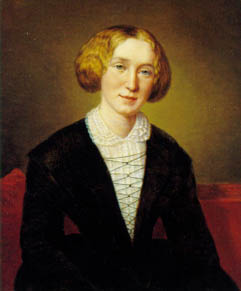
George Eliot (1819-1880) wrote in a time when women writers were so disdained that Eliot (nee Mary Ann Evans) had to adopt a male identity in order to be published. She must have often felt like her character, Dorothea, bereft and discouraged with only her faith to sustain her.
When my friend Rhonda was undergoing the horror of chemotherapy (for two different kinds of cancer) she tried to describe to me the loneliness of this kind of agony. "When life drags you down that far, you feel worse than s— there is no one there for you. It's then that you discover it's just you and God."
Exhausted caregivers may sometimes feel the same way. In the solitary hours of the night shift, with too many patients and too little staff, or in the middle of a hard day, the golden thread of faith may feel frayed.
Ancient Greeks thought of the body as being pulled toward the ground. The only connection to God, they believed, ran along a slender thread that extended from their hearts to the heavens.
We imagine friends and family as real and God as intangible. After all, in the middle of our darkness, how can God give us a hug? Yet, the presence of God is the only unconditional Love we may know. God is pure Love and attaches no conditions. God is present to us. Are we present to God?
Is this Love enough for you when you have lost hope? How do you sustain the thread of your connection to God when life seems empty?
-Erie Chapman


 Journal of Sacred Work
Leave a reply to Karen York Cancel reply