Today's meditation was written by Cathy Self, Senior Vice-President for the Baptist Healing Trust.
 Henri Nouwen, internationally renowned priest and author, consciously worked out what he called a theology of the heart and a spirituality borne of solitude, community, and compassion. Much like Thomas Merton, Nouwen stressed the importance of relationship when speaking about pain, suffering, and those things that weigh on our hearts.
In the collection of his writings titled The Inner Voice of Love, Nouwen suggested pain is always connected to specific circumstances; we suffer because of hurt that has occurred in a specific time and in a specific place. Feelings of rejection, abandonment, or even uselessness are rooted in concrete events. Each experience of pain is indeed unique. Nouwen challenged the notion, however, that uniqueness means separateness. He wrote: "as long as you keep pointing to the specifics, you will miss the full meaning of your pain. You will deceive yourself into believing that if the people, circumstances, and events had been different, your pain would not exist. This might be partly true, but the deeper truth is that the situation which brought about your pain was simply the form in which you came in touch with the human condition of suffering. Your pain is the concrete way in which you participate in the pain of humanity."
The paradox of shared pain is that healing, according to Nouwen, means moving from your pain to the pain. Focusing on the specific circumstances creates the opportunity for anger, resentment, and even regenge-seeking (although sometimes it seems we thinly disguise that motive as rational justice or fairness). Real healing comes from realizing personal pain is simply a share of humanity's pain and opens the possibility of compassionate living.
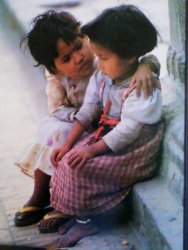
Nouwen's hope was that we would find the way to live in solidarity with each other, including the hungry, the homeless, the prisoner, the refugee, the sick, and the dying letting our personal pain become part of what is shared among us all. When we can see our pain not as unique but shared, suffering is also shared, and the burden becomes lighter for us all. In that shared place we find solace and healing. In the eyes of other we see ourselves. Sound familiar? Sounds like Love to me.


 Journal of Sacred Work
Leave a reply to Diana Gallaher Cancel reply