Today's meditation was written by Cathy Self, Senior Vice-President for the Baptist Healing Trust.
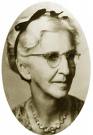 She was twenty-eight and her engagement to be married dissolved. In a "fever of decision," she abruply announced "I'm going to be a doctor." Four years later, Dr. May emerged ready to settle into a private practice deep in the South, in Atlanta. And then she met, married, and followed Professor Wharton first to New England and then to the rural area of Pleasant Hill nestled in the Appalachian foothills of Middle Tennessee.
The story might not surprise us today, but in 1922 the presence of a doctor in the foothills was rare, even more so as a woman. Too often Dr. May Wharton was called in to help the people of the mountains when it was too late – when the herbal concoctions had failed, when prayers seemed of no use, and only then "Doctor Woman" would be called. Long treks by mule and wagon were required for every call, her payment almost always what few pennies could be spared; heavy tiredness became her constant companion. Yet she committed to making a difference, to help the mountain people to better health and better lives.
When her husband died suddenly and unexpectedly, friends and family members tempted Dr. May to brighter places of health and healing–a clinic in New Hampshire filled with supplies, a hospital newly built and standing ready in Phoenix. She faced a reality of no money, no house, no supplies, "no anything," supported it seemed only by a faithful nurse who remained by her side. And then the knock at the door, neighbors appearing–"We come to tell you how sorry we are, Dr. May. We'd all be proud to he'p you with your movin'." He paused and fished in his pocket. "We brung you this paper to read," he said, handing her a crumpled sheet:
"Dr. May Wharton, In behalf of the town and surrounding community we wish to express our sympathy for you in your trouble and we feel we have suffered a great loss in the death of Professor Wharton. The people here wants you to stay here as their Dr. and pay you monthly and also help you with your hospital. We feel we cannot do without you."
At the bottom of the letter were the signatures of fifty heads of families. Dr. May writes of the personal response she had to the letter: "That night I resolved solemnly to do as much for them as they had this day done for me. I resolved that mothers should be saved; that little children should be given a fair start in life; that pneumonia, pellagra, diabetes, anemia and all the rest should not go on and on until no medical skill could cure them; that the old and invalided should have some comfort and care even when they could not be mended; that those far from doctors should have medical aid brought within reach–of their homes and their thin pocketbooks."
One doctor woman and a faithful helper could not do all this. But they could make a beginning. And they did, serving their community well into their 80's. Today the Pleasant Hill community is blessed by the presence of Uplands Retirement Village and the Wharton Long Term Care facility, both graced with caregivers committed to compassionate, loving care. No one of us can do it all, but each one of us holds in our hands the Golden Thread of legacy and hope for those we serve now and for those caregivers who will walk in our footprints. Dr. May's heart and words seem reminiscent of the hearts and words shared in these pages by so many of you: "perhaps in time there will be no forgotten ones among us . . . and even the least of God's children scatted over our hills are no longer in danger of being passed by." We still have much to do, yet hope calls us by name. When your constant companion is heavy tiredness, and the need is so great, how do you find the strength and resolve to continue so there will be no forgotten ones among us?
Excerpts taken from Doctor Woman of the Cumberlands (1953), May Cravath Wharton, M.D. Published by
Uplands
Retirement
Village
,
P. O. Box 168
,
Pleasant Hill
,
TN
38578
.


 Journal of Sacred Work
Leave a reply to Karen York Cancel reply