Journal of Sacred Work

Caregivers have superpowers! Radical Loving Care illuminates the divine truth that caregiving is not just a job. It is Sacred Work.

About

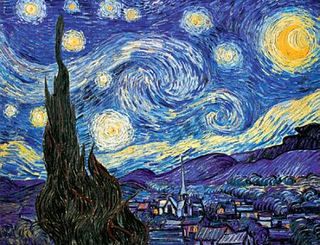
Starry night    Many years ago I heard a fascinating lecture by an ophthalmologist on the impact of failing eyesight and other eye diseases on the work of major artists. This physician contended that the work of some artists changed, and sometimes became richer, because their changed eyes caused them to use odd color combination's and distorted angles.
   Did Rembrandt's age affect the genius of his work? In another way, was it Van Gogh's distorted brain chemistry that caused him to create some of the most striking and beautiful masterpieces in history? Did cocaine help Edgar Allan Poe scare us with his horror stories? Did alcohol influence the creation of some of F.Scott Fitzgerald's finest stories?
   Some psychiatrists might contend that we are our brain chemistry. Certainly, our personalities including our moods and the way we behave are enormously impacted by our state of mind.
   As an assistant district attorney, I often prosecuted criminals who claimed they were "out of their minds" when they committed a particular violent act and that their criminal action was not "who they really are."   

   How do you see the patients who come to you for care? I believe our concept of the humanity and soul of another often has a big impact on the quality of care many receive.
   If you, as my caregiver, can understand that my irritability and anger is a function of my fear and not a personal attack on you, than perhaps I can give you better care. If you hear my anger as a personal attack on you, how might it affect your care of me? Will my call light be ignored? Will I be labeled as a "problem patient" on your chart and be discriminated against by other caregivers?
   The thing I've never liked about the brain chemistry idea is that it always seems to demean human individuality and accomplishment. If I'm not responsible for mistakes caused by my brain chemistry than I guess I don't get any credit for any good stuff I've done. My good acts, after all, must have been because my brain chemistry was balanced just right.
   Should we praise Van Gogh for his genius or write it off to brain chemistry? Should we honor Mother Theresa or just say she was driven toward sainthood by some kind of obsessive disorder?

   Classifying people by disease states can be hazardous to the humanity of both patients and their caregivers. If a sick human being becomes merely "the gall bladder in 4028" then who is the caregiver? If we think of ourselves as simply a combination of chemicals, than how does our soul find expression?

What do you think?

-Erie Chapman  

Posted in

5 responses to “Day 189 – Chemistry & Our Soul”

  1. Tom Knowles-Bagwell Avatar

    I once had a seventeen year old start off a process of therapy with me by asking, “What do you think? Can the second law of thermodynamics account for consciousness?” I have to say, this was one of the most fun clients I’ve ever worked with. He was at the same time bitter, playful and brilliant.
    These days I’m finding it facinating to explore the neuroscience research that is telling us how personal experiences — especially interpersonal relational experiences — change brain chemistry. And not just the chemistry, but the actual structure of the brain as well. It seems that engaging in certain mental practices (e.g., insight meditation) or relationships (psychotherapy) can actually repair damaged brain circuits.

    Like

  2. Erie Chapman Avatar
    Erie Chapman

    Thanks for your comment and insight, Tom. So, can the second law of thermodynamics account for consciousness? If so, we’re done for. Man, I’m feeling isolated and disordered and, well, in the middle of Entropy city.

    Like

  3. ~liz Wessel Avatar
    ~liz Wessel

    How nice to see you comment again on the Journal Tom! My apologies in advance for such a lengthy response. These are interesting concepts to contemplate. I agree, I think there are many fascinating mysteries about the brain that we have yet to understand. This week I watched a PBS show called “Musical Minds.” The show explored the question, what is it about music that can unlock the brain?. One person had severe Tourettes Syndrome and his tics improved through playing the drums. Another person was blind at birth with significant learning disabilities, yet he could play the most complex musical compositions after hearing the piece only once. An orthopedic surgeon who was struck by lightening suddenly had a passion to play and compose classical music. Physician Oliver Sacks studied why some people with neurological disorders could not walk but when music was played they could dance and why people who could not speak could sing (Movie, Awakening.) Music can have powerful healing effects.
    I guess I don’t buy the failing eyesight theory in relation to the artist. I believe great artists open themselves to the creative energy of Light, which flows through them and may manifest in form. I have an artist friend whose eyesight is diminishing due to macular degeneration and eye hemorrhages. Her response to this devastating blow is inspiring, “Everything is a gift. You need to find the gift in every situation. I say to God, I am stilling unwrapping some of my gifts.” What a lesson for me to learn! My response is, “Why this artist’s eyesight, God? Anything but her eyesight, take her hearing, the use of her legs, but please, not her eyesight.”
    As humans, when a conflict arises or if we perceive we are under attack we are genetically hard-wired to respond in one of two ways: flight or fight. As our adrenaline starts pumping the blood leaves the brain flooding our extremities, and we revert to a more reptilian level of thinking. In the book, Crucial Conversations (C.C.) this flight or fight response is described as silence (withdrawal) or violence (attack) behaviors. Fortunately, there is a third option: we can respond to a person, who is hurting with Love. When a caregiver’s efforts to help are met with anger, it challenges us not to revert to primal responses. To be of help to someone who lashes out requires self-awareness, insight, communication skills, and the ability to see with the heart. First, how can we make it safe for the hurting person? Usually, these encounters take us by surprise and unfold quite rapidly and often our motives shift without our awareness. We may go from wanting to be helpful to a desire to be in control, to be right, or to win the battle. According to C.C. it is important to be able to take a step back from the situation and ask ourselves, what do I really want for myself, the other person and the relationship? If we can do this, our brain begins to use the higher thinking processes again. Most likely, we did not learn these skills growing up but the good news is that we can change and learn them. It does take motivation and a willingness to work on ourselves, and to practice these skills over, and over again. For me, I want to keep at it and that means for my lifetime.
    When I look at the person in front of me, what do I see? Can I see the radiant light of Love? Do not leave your brother or sister frightened or alone in darkness but help them to perceive the Light of which they are a part by offering a little kindness and forgiveness. “Nothing around you but is part of you. Look on it lovingly, and see the light of heaven in it.” ~Course in Miracles.

    Like

  4. Karen York Avatar
    Karen York

    The answer is love.

    Like

  5. Edwin Loftin Avatar
    Edwin Loftin

    Victor Frankel provides an answer for us to consider. In context- we have a choice- between the moment of stimulus and response we have a choice and in that moment …….is our oportunity to see, hear, feel, understand, and most important… be healing and loving in our lives.
    What a choice we have!!!!

    Like

Leave a comment