On Monday morning, my younger sister Martha, plagued with the kind of spinal trouble common with dwarfism, entered a Toledo hospital for back surgery. Down in Nashville, at almost the same moment she was being wheeled into the operating room, I was struck with an excruciating back spasm that left me immobilized on my office floor for several hours.
Is there such a thing as true sympathetic pain? Probably. We wince when we see someone else in pain. We may cry when we see the sadness of others. The most unusual case of sympathetic pain I've heard of personally happened when a friend of mine, Dan Wilford, was refereeing a football game in Texas and broke his leg. His twin brother, living in Florida and unaware of Dan's injury, called Dan's wife. "I'm having a terrific pain in my leg. Has anything happened to Dan's leg?" he asked.
 These kinds of cases are interesting, but what, if anything, do they tell us? We want caregivers to identify with the pain of their patients so that they can demonstrate compassion. But, we don't want their caring hearts to disable them from helping.
Apathy is, of course, another issue with caregiving. The woman, above, is Zainabu Sesay. At the time this image was made, she was dying in a Sierra Leone hospice. Morphine could have relived much of her pain. But, none was available. This can only happen when those in power choose not to care. The little chick pulling on her sheet appears to care about her more than the world community.
Love can feel like a very mixed blessing. During my ordination service, one of the men laying hands on me whispered into my ear: "Love is a dirty business." As the case of Ms. Sesay shows, he's right.
We like to think of Love in romantic terms. We like to imagine Love delivered by saint-like people crowned with halos. But we know the truth. For example, ministering to the homeless and the imprisoned, as I plan to do in answer to my own calling, means engaging people in "dirty" settings.
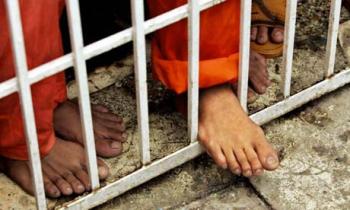 During my years as a prosecuting attorney, I used to lie awake at night wondering about the lives of those I'd helped to imprison. Criminals are sentenced to places that keep them from harming "law-abiding" society. But, they are not sentenced to be raped in their bunks in the middle of the night. And they law does not instruct that prisoners be treated like animals. Don't we want them to emerge from prison humanized rather than demeaned?
Perhaps the best way to inform our healing efforts is to accept the pain which comes from identifying with the pain of others. After all, the weakened depend upon our strength to help them rise from the depths of their darkness. They need our compassion as well as our skill.
How can we ordain those in need with our Love? Do we need to be concerned about our ability to experience "sympathetic pain? " or should we nurture it?
-Erie Chapman


 Journal of Sacred Work
Leave a reply to ~liz Wessel Cancel reply