"Can death be sleep, when life is but a dream?" – John Keats

Long before Keats wrote the above line, Socrates, Plato and Aristotle all posed the notion that all of life is a dream. After all, how can we truly tell whether we are awake or asleep or in some other state of consciousness if, in each state, we think we are living in reality?
Caregivers have more of an opportunity to observe this than perhaps any other group. Patients enter hospitals, hospices and nursing homes with widely different states of consciousness. The experience of institutionalization is likely to send them through an even wider ranging journey.
Drugs that relieve pain also bend our perceptions. Pain itself fogs the lens through which we view the world. Patients nearing death frequently describe seeing people who "aren't there."
The power of this point for caregivers is the need to respect these varying states of consciousness and to honor them as true for each patient. Unfortunately, many are frightened by the unusual states exhibited by people in altered states. Their fear may cause them to ridicule the schizophrenic hearing voices and to demean the demented.
Perhaps the most crucial gift of the caregiver is to honor the continuing humanity of the patient in their care, regardless of that patient's state of consciousness. When the patient is degraded, so is the caregiver. When the patient is honored and respected, so is the caregiver.
There are way too many times in my long career when I have failed to follow my own advice. I have caught myself sitting in judgment on a man suffering from alcoholism or a four hundred pound patient struggling to move in her hospital bed. As children, we grow up in environments where being different is ridiculed.
It takes God's Love to remind us that we are all children of Love. It takes this same Love to help us understand that life may, in fact, be a dream. 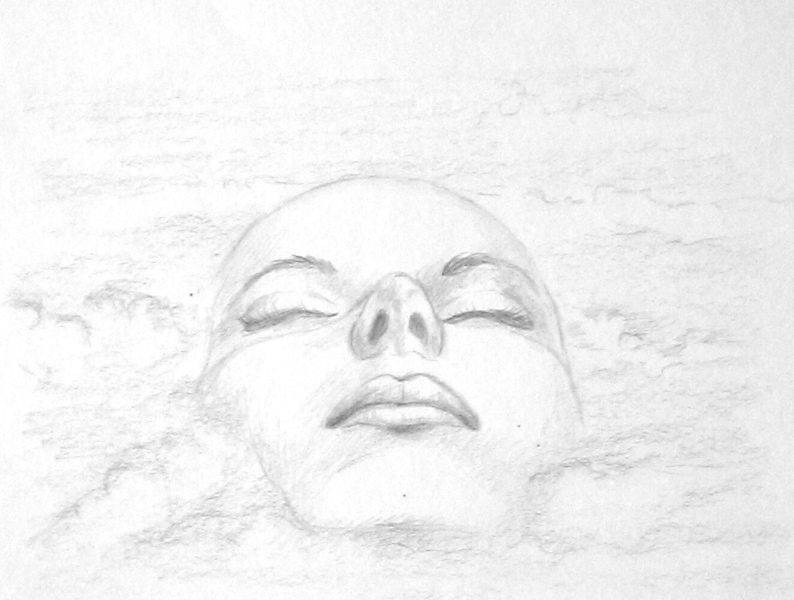
All of us will arrive in a different consciousness tonight as we enter sleep. For all we know, we may wake up in a hospital bed with a stroke, suddenly shaping a prayer that the person caring for us will appreciate that we may have lost our speech, but not our humanity.
-Rev. Erie Chapman


 Journal of Sacred Work
Leave a reply to erie chapman Cancel reply