"The real voyage of discovery consists not in seeing new landscapes, but in having new eyes." Marcel Proust
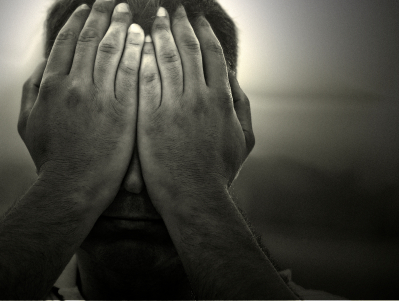
One of the mysterious things about sleep is that eight hours of it can seem like an instant if uninterrupted. Eight hours in a body laced with pain across any given night can feel like a year. Dawn greets our exhausted selves and we question our survival.
But, pain does not make us question our existence. It is too vivid an experience for us to doubt its reality.
Crohn's disease has attacked me in many different ways across the past four and a half decades. Beyond its numerous body blows, the disease has done its best to destroy my emotional balance. Instead, it has served to strengthen me.
Anyone with a chronic illness knows the deep connection between pain and the way the mind and spirit receive it. Chronic illnesses always have their acute phases as well and they can cause us to fear their revisits instead of appreciating the time when they leave us alone.
My experience with severe illness and other kinds of pain has given me the gift of new eyes. On the other side of agony, I saw a different world. I felt a new communion with those traveling their own hard chapters. And I began to understand, appreciate and savor the most beautiful things life offers.
At the same time, I saw many others blocking their painful experiences, refusing to recollect them and sometimes choosing to anesthetize themselves from future discomfort by drinking and drug use. In so doing, they threw away pain's gift.
To be human is to know pain. Can you think of anything more expensive than pain – physical, emotional, spiritual or all three? In the middle of it, we would pay almost any price to escape its grip.
When pain finally departs, the backwash of relief can deliver its dose of amnesia. Pretty soon, we may have forgotten our own pain and thus diluted our ability to connect with the pain of others.
Pain is so costly to us. Therefore, why would we want to dismiss pain's expensive teachings? Why wouldn't we want to unwrap the strangely beautiful gift it presents to us?
What did Job learn after his legendary bouts of suffering? What do Job's tribulations teach us?
Inside joy, we may see God's Love. Inside deep pain we may also discover God's Love. This is one of the teachings of Jesus' suffering on the cross.
For caregivers, there is no more important lesson than learning what pain tells us about compassion. To ignore our experience of pain is to turn our backs on something that is both universal and yet unique.
One of the worst things a caregiver can say to someone in pain is: "I know exactly how you feel." For this kind of statement will never sound true to the sufferer.
One of the best things a caregiver can do is the one good thing Job's friends did: They stayed nearby.
Pain is isolating.
We cannot know joy unless we have experienced our own agony and held it in our memory.
We cannot deliver God's Love unless we have traveled our own dark path through the forest and followed Love's light to the other side. When we reach the land of relief, it is then that we need to turn back to help those who still suffer.
-Rev. Erie Chapman


 Journal of Sacred Work
Leave a reply to Victoria Facey Cancel reply