The leader's most important job is to take care of the people who take care of people.
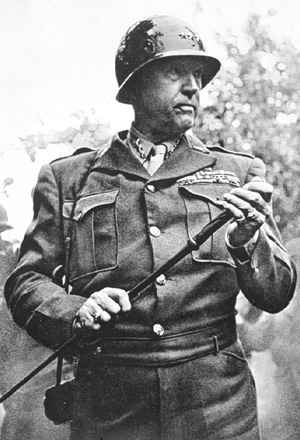
Ordinary leaders in hospitals and hospices (along with their board members) are forever misunderstanding their key role. They focus too much on bossing people around as if they were General Patton (left). Instead, they need to care for caregivers.
Ordinary leaders obsess about finance and technology at the expense of mission. Loving leaders never make this error. They understand that operational issues are secondary to the work leaders do to support and care for the first line staff.
In more than thirty years of work as a healthcare CEO, I've learned that success turns heavily on the way in which leaders care for staff, most of whom are women. If this is done successfully, caregiving thrives and so does the hospital or hospice.
If the leader creates a climate of fear or, alternatively, tolerates mediocrity, then fear and/or mediocrity become rampant.
A difficult issue often arises here. Hospitals and hospices are staffed,as mentioned, primarily by women. They are led, predominately, by men. Most hospital boards are also populated by men. This frequently creates a clash of female and male energy.
I have seen many kind-hearted nurses take on surprising amounts of "boss-type" behavior when they are promoted to leadership. This may be because they are trained (if at all) by male leaders. It may also be that the predominant leadership model in American society is command-control based rather than a love-based partnership model
Most men were raised in cultures that encourage aggression and competition. Most women were raised in environments where care and kindness prevailed.
Male energy (whether it occurs in a male of female) rises from the primitive need to attack, hunt, and provide. Female energy (whether it rise up in a female or male) may express itself naturally in supporting harmony and receptivity.
Men may tend to bark orders in a way that offends the feelings of some women.This can cause some female caregivers to shift their energy from efficiency to nursing their hurt.
When this dynamic occurs, loving care suffers.
The answer is easy to articulate but can be hard to practice. When I went from being a federal prosecutor to leading a hospital, I immediately encountered difficulty with this. Trial lawyers (and their clients) thrive on aggression in courtrooms that reward wins, not kind relationships.
Soon, it became clear to me that I needed to moderate my tendency to compete and replace it with a focus on compassion as well as skill.
Hospitals need to be bastions of caregiving which requires compassion as well as competence.
Perhaps, the solution is to find a balance between the assertiveness of males and the receptivity of females so that both may accomplish what is best for patients and families.
How do caregivers relate to leaders? Loving leaders understand that they do not (except in cases of high emergency) need to be "bosses" ordering staff around like sergeants commanding soldiers.
The core of the best leadership is always grounded in love. Whatever the question, Love is the answer.
-Erie Chapman


 Journal of Sacred Work
Leave a reply to Victoria Facey Cancel reply