"…Finally, I looked into my own heart and there I saw [God]; [God] was nowhere else." Rumi
 In 1969, my wife & I and our six-month-old son boarded a plane bound for New Orleans. Soon, that monotonous announcement about buckling seat belts and putting up tray tables "in their full and upright position" droned over the loud speaker.
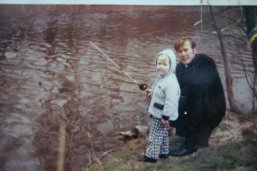
Because of our six-month old son (at left, with me, at age 18 months) my ear was caught when the flight attendant got to one particular part: "If we lose cabin pressure, an oxygen mask will fall down. If you are traveling with a small child or someone that needs assistance…"
Back then, I thought I knew the rest of that answer. Of course, it's my little son that needs the oxygen. I will give it to him first.
But you know the true answer. As caregivers, we need to put the mask on ourselves first so that we can then help the one in need.
In other words, without good self-care, we cannot give good healthcare to others.
It's difficult for for many of us to accept Rumi's words, above. It's hard to realize that God lives in each of our hearts. If we don't find God within, we find God "nowhere else."
The daily demands of life create a level of noise in our heads that can be deeply distracting. This noise can pull us away from God and our relationship with ourselves and, thus, risks all our other relationships.
The reason Love needs nurturing in us is that the demands of the world, including our individual appetites, are strong & seductive. We don't need to ignore these demands. We simply need to ensure that they exist in equipoise.
Fatigue threatens balance. Anger threatens balance. Too many distractions threaten balance. We cannot sustain our strength without Love's healing presence in our lives.
Absent Love, we are vulnerable to giving into our worst instincts. When Love is present, "the better angels of our nature" (Lincoln) appear.
We know the pathways to God's Love. What is crucial to the caregiver's relationship to God is true self care: rest & sleep, meditation, prayer, exercise, nourishment, presence with friends, laughter – our bodies & souls need all of these.
But, where is the time to do all of this?
The best caregivers recognize that many of these activities, this way of being, may require an adjustment in priorities but do not necessarily take great amounts of time.
Prayer & meditation: as few as five minutes a day can help. I know a nurse who prays at stoplights. I know a doctor that jogs three miles every morning & then prays for ten minutes before he heads off to the hospital to do rounds. I have even seen him bring his exercise bike to meetings & pedal through them!
Fortunately, good results, of course, don't require this doctor's level of commitment. Also remember that our work needs to become a kind of prayer – an expression of our spirit across the day and into the night.
Exercise: 20-30 minutes of walking during any part of the day. You don't have to knock yourself out. Medical studies reflect that those who take leisurely walks greatly extend life span and health.
The Rest: The remaining things take no time at all: food balance during meals, time with friends including those at work, smiles, hugs, touches, laughter here & there throughout the day takes no extra time.
Again, if we change our way of being, we don't need to carve out lots of additional time. We simply need to engage a few rituals that will help us make our work a ritual that expresses God's Love.
Self care is mostly rethinking our relationships more than it is adding big (and unrealistic) amounts of time set aside for extra practices.
To do any of these things means accepting the truth of the story from the plane ride: that we can't give needed "oxygen" to others unless we first breathe it ourselves. When we open to God's Love and accept ourselves as children of Love, we begin to realize that self-care is the foundation of all care.
-Erie Chapman


 Journal of Sacred Work
Leave a reply to Marily Paco Tronco Cancel reply