"He who has a 'why' can bear almost any 'how.'" – Victor Frankl (derived from Nietzsche)
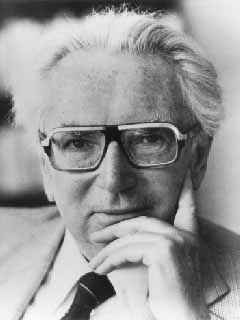 Before he was arrested by the Nazis and cast into the hell of three consecutive concentration camps in three years (including Auschwitz & Dachau) Victor Frankl, M.D., had established a superb reputation as a neurologist and psychiatrist.
But it was during and after his harrowing journey through hell on earth that he made discoveries about the human condition and human energy that impact human thought to this day.
As Dr. Frankl suffered, he watched hundreds of fellow prisoners die, and a few others survive. He asked himself how the second group (including him) made it through.
First, of course, there was the most random kind of luck. A low-ranking guard would direct a prisoner to a group on the left instead of a line of people on the right. A prisoner would learn that if he was in the wrong line, he was doomed to death. But the second line, the survivor's group, led not so much to life, but to a chance at life.
In the second group, Frankl wondered why he and some others found the will to survive, while others surrendered to their condition, often dying within twenty-four hours of uttering three words: "I give up." He found an answer which he delivered in his landmark book, Man's Search for Meaning:.
"Then I grasped the meaning of the greatest secret that human poetry and human thought and belief have to impart: The salvation of man is through love and in love."
What allowed some to find the energy to endure was a power that fueled endurance. The surviving prisoners found a focused, sustained and fiery sense of purpose.
It wasn't Love in the abstract that mattered, Frankl found. It was Love in specific, purposeful expression.
He focused this way: He didn't just want to see his wife, he was passionate about seeing her again. He didn't just like the idea of writing his theory, he had to tell his story. He began to view his hellish world as a sort of experiment, exchanging personal hurt for a higher cause. Yet, his love for his wife allowed him to stay in touch with passion and compassion. 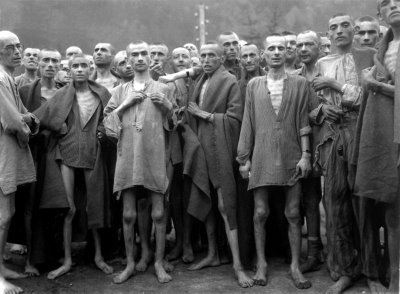
Our personal stories as caregivers may not be so dramatic. Yet, the learning is clear. When we have determined our "why" and committed to it, we can bear almost any "how."
Without a "why" in our lives, life becomes a daily grind instead of a source of joy.
When you and I have decided our work holds a powerful meaning for us, we can put up with occasional exhaustion, burn-out, frustration, mean supervisors, outside criticism, or all of the above. When we haven't engaged this level of purposeful energy, then we are vulnerable to a killer energy called quitting.
Every good caregiver encounters days when they feel like giving up. Then comes the time to rest, reflect, and consult our purpose. Is our work meaningful to others as well as ourselves? Can we yet contribute to helping others by the way we use our gifts?
The way we answer these questions determines whether we fulfill Love's call or surrender to mediocrity and a flat existence. Our work does not need to be heroic. We simply needs to express Love.
-Erie Chapman


 Journal of Sacred Work
Leave a reply to ~liz Wessel Cancel reply