“If you look for the bad in people expecting to find it, you surely will.” – Abraham Lincoln
 Fear threatens. Love affirms.
Negative thinking slams the door on hope. When we are closed off from hope, Love's light fades.
Of course, the world is never this clear-cut. We are bound to the earth by more than gravity. The world makes persistent claims on our spirituality. To transcend the world, we seek other-worldly energy – the energy of God's Love.
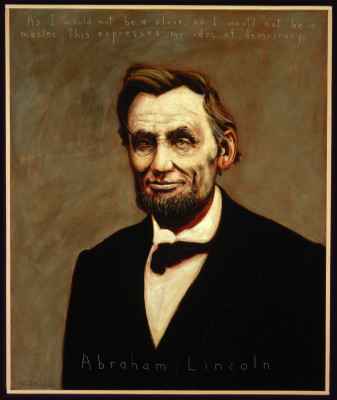
The life of Abraham Lincoln shows us that saintly people struggle, and often fail, in their efforts to transcend. At best, they accomplish transcendent Love at key moments. As these moments pass, the world, with all its demands, crashes back in on us.
The energy of positive thinking does not mean we are perpetually happy. In fact, a struggle to be happy all the time means we are out of touch with the grief in the world.
Positive energy enables us to hold hope in our hearts. Loving leaders like Lincoln, hold onto this hope in the darkest times – and help lead the rest of us through until light is found once again.
Victor Frankl held this hope in a concentration camp setting so grim there seemed no hope of light returning – ever. Mother Theresa sustained hope in the midst of caring for those without hope. Martin Luther King held hope in the midst of his cell in the Montgomery County Jail.
It's very tough for most of us to change negative thinking. Even generally positive thinkers often stumble. After all, the world is filled with pain. Lovers find the strength to inject hope right into the middle of this pain. This is what Gandhi did for decades in leading India out of darkness. It is what Lincoln did during the Civil War.
And this is what loving caregivers do. They bring hope to those of us frightened by illness or injury.
Important change often requires a quantum shift in our thought patterns. Indeed, "thinking" may not be exactly the right word to use next to "positive." For analytical thinking alone is not enough, To keep Love's hope engaged, lovers listen to the wisdom of an open heart.
To become the kind of positive, hopeful presence that patients and others need us to be, we are called to change our hearts. It is a changed heart that creates positive thought patterns. A heart that lives in gratitude. A heart that has found God's grace.
Show me a negative thinker and I'll show you a failure. If you are looking for trouble, you will find it.If you're expecting defeat, it will come to meet you.
There are apparent, but not actual, exceptions. For example, sometimes performers (including caregivers as they give care) act in negative ways. But, if they are truly successful, they carry strong threads of positive inner thought.
Finding the good in others, as Lincoln did, means we first have to find it in ourselves. Humor is the path we sometimes need to choose in order to stay balanced. No caregiver can sustain Love's energy without occasionally engaging the power of fun and play.
Abe Lincoln's understanding of the importance of humor ran so deep that he often used it to help his fellow leaders stay balanced. In the midst of his battle to pass the Emancipation Proclamation, he told some jokes to his staff.
Some cabinet members disapproved of Lincoln's light-hearted efforts in the middle of a grim time. “Gentlemen, why don’t you laugh?" Lincoln said. "With the fearful strain that is upon me night and day, if I did not laugh I should die, and you need this medicine as much as I do.”
Caregivers are in need of the same energy. Humor is a way to access positive thinking. Humor brings hope. And positive thinking is a key to Love.
President Abraham Lincoln's understanding of the need for positive thinking and the importance of seeing the best in others is clearly revealed in his Presidential decisions. His first cabinet selections proved this. He chose all of his serious opponents to serve with him!
As a result, he ended up with one of the finest cabinets in history. Unfortunately, no other President has chosen to follow this example, choosing instead to see the negative in their opponents instead of the positive.
Although Lincoln presided over a Civil War that darkened the hearts of millions, his humor was legendary. “Most folks are about as happy as they make their minds up to be," he said.
Lincoln himself battled depression (as did his wife, Mary.) Still, he was able to tap Love's energy by remaining positive and affirming others in the midst of enormous adversity. And it was his sense of humor that helped him regain the balance he needed to be a caregiver for all Americans.
Love's affirmation needs to begin within each of us. As we learn to love and affirm ourselves – to accept God's Love – we find the energy often called positive thinking.
High purpose leaders are deeply in need of positive energy to sustain Love's energy. Mark Twain, George Bernard Shaw and movie director Billy Wilder are all purported to have said, "If you're going to tell the truth, you better make it funny, otherwise, people will kill you."
The truth is, most doctors, nurses, social workers, technicians focus so heavily on fixing that they lose the magic of healing. Healing can only come through us if we are in touch with our spirituality. If we are out of touch with our spirituality, we will be unable to hear the voice of Love. For, God's energy travels to us through the pathway of our spirituality.
Humor helps caregivers avoid the trap of becoming too intense. Humor helps us refresh and restore and re-open the door we sometimes close to Love. Humor helps protect us from the arrogance of taking ourselves too seriously. "Take your work seriously, but not yourself," Bobby Kennedy said. And this kind of thinking is what helped all of the Kennedy brothers lead effectively.
Positive energy is also found in play. Playful thinking keeps us young. George Bernard Shaw wrote: "We don't stop playing because we grow old, we grow old because we stop planing."
As if to prove his point, Shaw lived to be ninety-four. In course of doing so, he gave us some of the greatest dramas ever written. Included among his best work is the brilliant play "Pygmalion," which formed the basis for the movie, "My Fair Lady" about a person who undergoes a dramatic life transformation.
We all need a Pygmalion-style reformation to learn how to open a continuous flow of hope's energy through our lives. With hope, we thrive. Without hope, we barely exist.
Positive thinking is often misunderstood. It doesn't mean we're laughing all the time. It doesn't mean we're happy and upbeat on all occasions. It doesn't mean we get what we want. More importantly, it helps us deal well with whatever comes.
For what positive energy does is fuel hope. Without it, we might, as Lincoln warned, die a spiritual death. With hope, we can heal both ourselves and others.
-Erie Chapman


 Journal of Sacred Work
Leave a reply to Julie Laverdiere Cancel reply