Journal of Sacred Work

Caregivers have superpowers! Radical Loving Care illuminates the divine truth that caregiving is not just a job. It is Sacred Work.

About

"When
they finally saw him, why he hadn't done any of those things … Atticus,
he was real nice,"
to which he responded, "Most people are, Scout,
when you finally see them."
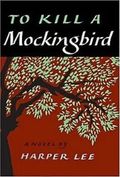
 
ToKillAMockingbirdbookcover
The above quote
is the last line in Harper Lee's novel, “To Kill A Mockingbird” as young Scout experiences an
epiphany. I could not
resist sharing a few thoughts, as the 50th anniversary of this Pulitzer prize winning novel is celebrated. This extraordinary story is my all time favorite, and is engaging on several levels.

 As you know, the story begins during the hot sticky days of summer in Maycom County, Alabama. I value the way these children made instant friendships that forged indelible bonds. This is how the summer unfolded between Dill (John Megna),
Scout (Mary Badham) and her brother Jem (Philip Alford). Actually, beyond the confines of the script, these actors did develop meaningful life long relationships.
When immersed in their world, I felt a nostalgia for my own childhood days.   

I
love the mystique involved with their strange seeming neighbors who lived in the house next door. How these children let their imagination run away with them, and were drawn into a night of mischief with a near miss escape. Ah, the surprise of all those inexplicable trinkets in the tree's hollow left for Jem and Scout to find. Soap figurines
carved in their likeness, a pocket watch, marbles and much more. All treasures that Jem hid in a cigar
box of secrecy.

It 1962, Robert Mulligan released a remarkable film version, which was scripted by Horton Foote. Composer Elmer Bernstein's music flows with an exquisite cadence that enhances the mood of each scene. The sounds are delicate, yet moving; sad but incredibly beautiful; magically sprinkled in wonder; sometimes alarming and yet woven together in a tender love. When I first listened I felt a wonderful, almost familiar feeling like the love of belonging to my family. Bernstein's music builds us up in suspense and then descends in gentle billows returning us safely home. I could listen, and listen, and never tire.

 I recall a poignant scene when an angry mob stormed down to the jail, fueled with
hate, to lynch Tom Robinson (Brock Peters). Robinson was a black man,
wrongly accused of a rape crime. Atticus (Gregory Peck) anticipated trouble and sat guard in front of the jailhouse all night long. In a tense moment, young Scout suddenly recognized a man in the crowd and calls out with hospitality. "Hey, Mr. Cunningham. Hey, I go to school with your son Walter. He is a
nice boy." Scout’s innocent greeting miraculously disarms the blood thirsty group and they skulk away hanging their heads in
shame.

 Throughout the movie there
is an underlying sadness and longing as Scout and Jem think about their mother who had previously died. She is missed throughout
the days and nights in the life of the Finch family. Atticus helps to fill the hole in their
hearts within the security of his abiding love. He is a bigger than life father who
shoulders the responsibilities of life with grace. As a lawyer he is willing to stand up for what is right to confront
racism, ignorance and fear. He lives Love courageously and defends Tom Robinson to prove his innocence. Atticus's
children couldn't stay away from the courthouse and squeezed their way in to watch the drama unfold from the balcony. They sat akin with the "colored  people" who were oppressed and vulnerable.
Ultimately, Atticus risked his family's safety and the lives of his children to serve.

What an
intense encounter ensued at the Robinson's home the night Atticus went to call on the family. It was just after the trial ended and Tom Robinson had received an unjust guilty verdict.The family was in shock and stricken with grief. Atticus went to comfort them and to offer
the hope of an appeal. Suddenly, a venomous Bob Ewell
showed up drunk and spat in Atticus' face. Atticus maintained his dignity and simply wiped his face with a handkerchief.
What a powerful moment of shining courage, and what a revelation of character as he turned and walked away from violence.

 
Mockingbird On Halloween night, an unsuspecting Scout and Jem were followed as they walked home from the school play.They were attacked in the woods and struggled with their assailant amid a dark chaos. It is their odd neighbor Boo Radley (Robert Duval) who came out of the shadows and saved their lives. The attacker Bob Ewell was killed in the skirmish. Sheriff Tate (Frank Overton) determined that in the
best interest of all, "Bob Ewell's death was an accident; that he fell on his knife." Illuminating these tragic events is the light of Love. 

If you have not read this book or ever watched the movie it is a must see! Add it to your bucket list or better yet watch it today. The video clip below highlights a few scenes from this classic film.

~liz Sorensen Wessel

Posted in

8 responses to “Days 207-208 When We Finally See”

  1. Diana Gallaher Avatar
    Diana Gallaher

    I also love this novel, Liz. I find the part about Mrs. Dubose one of my favorites. The image of Mrs. Dubose fighting her morphine addiction to a bewildered Scout is some of the best descriptive writing ever. And of course her example of courage as taught by Atticus to Jem is beautiful.

    Like

  2. Maureen McDermott Avatar
    Maureen McDermott

    If only we had more people of the depth and commitment of Atticus in our world today! Such a classic story always touches into the truth of who we are and who we are called to be, leaving us with both hope and challenge to do our part for the good and well-being of all. Thank you Liz for alerting me to the 50th anniversary of this inspiring book (I too loved the movie!!) – I am going to e mail our politicians to remind them of the anniversary in the hope that they might become the leaders we expect of them. By the way, there are many people in our world today who continue with the same passion and drive as Atticus!! Both you and I know them and appreciate them.

    Like

  3. Marily Avatar

    Thank you for the beautiful sharing. I have seen the movie, maybe someday I will have the chance to read the book. 🙂

    Like

  4. Susan Avatar
    Susan

    Such a classic and one of my favorites also !! So many lessons taught and learned. I had heard that it was the 50th anniversary of To Kill a Mockingbird….I appreciate that you took that info and ran with it Lizzie…you are a wonderful creative writer also!!!
    oxox

    Like

  5. Victoria Facey Avatar
    Victoria Facey

    Liz, how I enjoyed reading today’s heartfelt journal of my favorite book and see the wonderful clip you provided, along with the tender soundtrack. There are so many humbling lessons here: learning to love without judging, helping without expectations and wearing courage regardless of the size of the battle.
    I also agree with Maureen in wishing there were more of the like of Atticus and Boo Radley in today’s world…

    Like

  6. ann kaiser Avatar
    ann kaiser

    I love this book, I still have mine, signed by English teacher, Miss Reid..her inscription reads” Many life lessons here, take this book with you as you go and never judge anything by the cover that surrounds it”. Fascinating. Thank you Liz for bringing this back to us on this Anniversary. I agree with Victoria..wishing there were more….

    Like

  7. Shirley Irby Avatar
    Shirley Irby

    I watched this movie with my 15 year old daughter who had read the book in school before summer break. Liz you described it perfectly. Emily asked in the end if I knew who two mocking birds where in the story. Do you? But the story it tells is not over. And so…
    It lead me to describe to her the resent battle in the news this week of a video tape aired trying to show “reverse racism”. Shirley Sherrod was a black women working for the Agriculture dept and a speech of hers was deliberately spliced and diced to try to show her considering not giving her “full measure of service” to a white farmer when she worked for a non profit program for manly black farmers needing loan assistance. In actuality the story she told was to make a point that she quickly realized it didn’t matter if a person was white or black, it was more a matter of have and have not.
    But the media spun out of control and she was text while driving and told to text in her resignation before Sean Hannity broke the story on the evening news. The next day the entire text of her speech vindicated her and the white farmer and his wife told CNN how in fact she had worked diligently to save their farm.
    But the back drop which isn’t told is how at 17 her father was murdered when shot in the back while walking away from confrontation, by a white farmer with klu kluk klan ties. He was never convicted of the murder. She then vowed not to leave this racially divided life in the south but stay and serve. She graduated from college and married a remarkable man and they learned co-op farming and developed an amazing co-op, New Communities, to eventually lose it because of a recent system of racial discrimination. It was this system that failed her, and that she fought to help other black farmers and this white farmer, that lead to the story and the edited video that lead to her firing last week.
    But the story doesn’t end there, it turns out that between 1981 and 1996 the agriculture department was the last governmental arm to desegregate. It was denying black farmers loans, humiliating them and forcing them out of there family owned farms. It became know as Black Wednesday, when that was the only day they could apply, they were lined up outside all day, doors where left opened so all could hear them denied, cursed at and spit on. A law suit was eventually settled in 1999 in their favored, only to have the caveat that congress must appropriate it. That didn’t happen under the Bush administration and so far not under Obama’s administration. In Fact Obama’s dead line of March 2010 has come and gone. These poor black farmers have lost their family farms and many have died before the money has been returned to them. The average subsidy to the top 10 percent of farms is over $1 million per white farmer. The average subsidy to a black farmer is $200 per SARA BRESELOR writing in Salon.com in April 2010.
    So when Shirley Sherrod takes her time to consider the job offers to repair racial discrimination within the Agriculture department you can understand why. Some have characterized this agency as the last plantation. As Shirley has said I can’t be the fall guy to fix this problem, it is still to wide spread. Perhaps her story will mobilize those who can. And perhaps the innocent Mocking Bird can and still needs to be saved.

    Like

  8. Marilyn Donan Avatar

    Atticus was a lot like my dad–no kidding. My dad was tall, and a very thoughtful man with incredible ethics. Okay, he wasn’t a lawyer, but was very well read. He didn’t always say “just the right thing,” but he spent a great deal of time listening to my thoughts, and gave sound advice when I asked. My dad died when I was twelve, but he made quite an impact on me. He guided and loved his children as Atticus did. I was, and still am, very proud to have been his daughter. I truly hope this doesn’t sound “too braggy.” I justloved my daddy, and miss him forty years later.

    Like

Leave a reply to Victoria Facey Cancel reply