Last Saturday, I met a man who is scheduled to die. Unless there is a stay of execution, on November 9, 2010, guards will enter Steve's cell, walk him down a hallway, put him on a gurney, and kill him. His executioner will, of course, be following government orders.
I wonder if Steve will have any caregivers alongside him on his fatal walk? Will anyone who accompanies him recognize that he, too, is a child of God?
There are many kinds of homicide. In every case, a killing is judged by one of the world's rules. The minority live by God's rules. Loving caregivers know the difference.
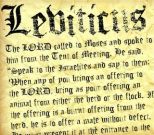
The writers of Levitcus thought they were articulating God's law when they wrote: "Anyone who kills a human being shall be put to death….Anyone who maims another shall suffer the same injury in return: fracture for fracture, eye for eye, tooth for tooth; the injury inflicted is the injury suffered." – Leviticus 24:17 & 19-20
Leviticus is a set of old rules, not the language of Jesus - or of another great Lover, Mahatma Gandhi, who wrote: "If we practice and eye for an eye and a tooth for a tooth, pretty soon the whole world will be blind and toothless."
As part of my current efforts at caregiving, I have begun ministering to Steve. Like every inmate on Tennesee's Death Row, he is locked up alone. No one else has been visiting him.
Contrary to my long-ago career as a prosecutor and judge, my work as a Christian minister is not about guilt or innocence. I am to help this man encounter God, not the courts. My other Death Row inmate tells me the way I can help him best is simply to "show up." He understands another key aspect of caregiving – presence.
Ever since I began working in hospitals in 1975, I have been startled by the similarity of the rules that govern both prisons and hospitals and have written about this subject often. For in most hospitals, patients are treated, (unintentionally, of course) as hostages.
We take patients and make them prisoners. Naturally, it's all for their own good.
Still, consider the process of being admitted. As patients, our clothes are exchanged for a humiliating gown, we are numbered and we are placed in a room that is sometimes not unlike a cell (often with a complete stranger as a roommate.)
Our freedom is severely restricted. Friends may only visit during hours prescribed by the institution. As sick people, we are too often made to wait endlessly for a bewildering array of tests during which our bodies are stripped, poked, marked and otherwise invaded by people who literally, if not figuratively, look down upon our helpless selves. They intend to be good caregivers. The repetitive nature of their work can, however, deaden their humanity so that they end up treating us like numbered bodies instead of suffering humans.
But, what about Steve? What does his life have to do with caregiving? After all, doesn't he deserve to die for taking the life of another? Didn't he violate one of the ten commandments?
The answer to the last question has been answered by the courts. As for the other questions, we need only ask: what happens to our humanity whenever we take the life of another? When Steve is eventually executed, will the state breaking the same commandment as did Steve?
In even broader terms, terms that apply to all of us, what happens to our humanity when we follow any rule that violates Love, even if that rule is somehow grounded in the Bible?
Anyone who takes the Bible literally must not have read Leviticus. Here is one of hundreds of examples from this two-thousand-year old book of rules: "One who blasphemes the name of the Lord shall be put to death; the whole congregation shall stone the blasphemer." Leviticus 24:16.
According to this verse, God says anyone who swears shall be executed. Even worse, the execution has to be conducted by all of his fellow congregants. If we follow this Biblical rule, would we have to execute half the world's population?
The rules of Leviticus sound ridiculous to modern ears. Do you think that if I or swear we should be executed? Of course not. Are we supposed to follow the Old Testament injunction by killing certain animals and offering them as a sacrifice to God? Of course not. Is a divorced woman who remarries an adulterer? Of course not. But Leviticus claims there are are rules straight from God.
If we look through the lens of Love we see that most of Leviticus' is not the word of God. It is simply the dictates of Rabbis and priests seeking to create an orderly society thousands of years ago.
"Are you a Christian?" people in Tennessee sometimes ask me. "Yes," I say. "Good," they respond, suggesting that if I had said "No, I'm Jewish," or "No, I'm Muslim," that would not be good – and maybe I wouldn't be either.
"How are you doing loving your enemies?" I sometimes ask these fellow Christians, quoting the injunction to us from Jesus that he delivered in the Sermon on the Mount (Matthew 5.)
They laugh, of course. "Love my enemies?" the idea seems preposterous to these Christians, even if they follow the view that the Bible comes to us as a perfect translation of God's word.
Have you ever read some of Jesus' other "rules" contained in this same, beautiful sermon given by Jesus to his disciples? "Give to anyone who begs from you, and do not refuse anyone who wants to borrow from you." (Matthew 5:44) How are you doing with this instruction? If following all of the rules in the Bible is a requirement for being either a good Jew or a good Christian, I am done for.
Here's the truth: God's Love asks us to live by wisdom and compassion. God does not want us to adhere like robots to society's laws no matter what.
Love calls caregivers to use our heads and our hearts – to follow the rules when that is wise and compassionate and to break them (or stretch them) when following those rules would violate God's truth.
Good caregivers know when to loosen up on visiting hours in the interest of Love. And the best and most courageous caregivers choose to stand up to overbearing supervisors when rules conflict with God's Love.
Steve may die on November 9. If he does, I believe that killing will be one more blow to God's Love and to our humanity.
Each day, caregivers have the chance to lift up humanity by treating the downtrodden – and each other, as children of God. No other rule matters.
-Reverend Erie Chapman, J.D.


 Journal of Sacred Work
Leave a reply to Barb Mason Cancel reply