"I love him whose soul is deep even in the wounding, and may succumb through a small matter: thus goeth he willingly over the bridge."
-F.W. Nietzsche
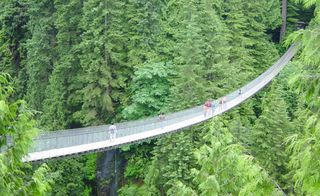 The late philosopher John O’ Donohue noted that as human beings we have a strong desire to domesticate our lives. In an attempt to create a sense of security we carve out niches that are predictable, reliable, and within our control. We live patterned routines and gradually become trapped by expectations of ourselves and others. We may lose touch with life’s fluid nature and the miracle of being here. We can travel through our days and nights seemingly unaware of how precious the gift. Perhaps on some level we know but we get caught in the struggles and are uncertain about how to live any other way.
Richard Rohr, a theologian, offers us an insight. “Like a bridge across the river between the conscious and the unconscious, our soul mediates and carries the images from one realm to another. The soul also mediates between the body and the spirit, and builds a bridge to the other side so the conscious and unconscious can walk back and forth. This is soul work. Opening up this bridge is the work of the second half of life."
 A bridge provides an opportunity to cross over some obstacle to get from one point to another. To cross requires making a choice and involves action on our part. Do we move forward or do we avoid venturing into unknown territory? Will we risk the sacred journey?
O’ Donohue realized that the greatest gift we could ever dream could be given by only one person… and that person is YOU! He explained, “The most subversive invitation you could ever accept is the invitation to awaken to who you are and where you have landed. When your soul awakens, you begin to inherit your life. The greatest friend of the soul is the unknown.”
Often, we are leary of the unknown as the crossing may seem perilous. We may get stuck, afraid we will make the wrong choice and become paralyzed by anxiety and fear. At times we hold on 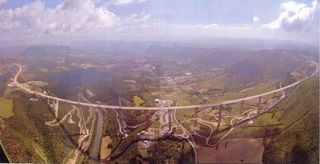 doggedly to the familiar, even when the result is detrimental rather than trust the promise of creating a new future.
In his Book, "The Heart Aroused," David Whyte tells a story of his hiking trip in Tibet. He was with a group but planned to venture off on his own and reconvene with them a few days later. Eventually, he came upon a dilapidated old bridge that he would have to cross in order to meet up with his hiking party. Several of the footboards were missing and he saw a treacherous gorge 400 feet below. He sat for an hour surmising the risk of crossing amid such danger. He could not move forward and felt discouraged by the propect of having to turn back.
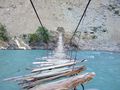 Suddenly, an old bent woman appeared carrying a large basket on her back and her eyes glued to the ground. She was searching for dung that was needed for fuel. Startled by David, she placed her hands in a prayer pose and bowed in the customary greeting of Namaste (I see the God in you). She turned for a moment and with a mischievous smile disappeared across the rickety bridge. w Qucikly and without hesitation David immediately followed after her to the safety of the other side.
On a daily basis, we are faced with the choices of crossing the bridges of our lives. We need to trust our inner voice. Rather than react or retreat from challenging experiences we can choose to a better way.
"I would love to live like a river flows, carried by the surprise of its own unfolding."
– John O'Donohue
 John O’Donohue encouraged the passage of awakening, “Once you start to awaken, no one can ever claim you again for the old patterns. You want your work to become an expression of your gift. On this journey, you begin to see how the sides of your heart that seemed awkward, contradictory and uneven are the places where the treasure lies hidden. You develop from your own self-compassion a great compassion for others. You are no longer caught in the false game of judgment, comparison and assumption. At the deepest level, this adventure of growth is in fact a transfigurative conversation with your own death. And when the time comes for you to leave, the view from your death bed will show a life of growth that gladdens the heart and takes away all fear.”
~Liz Sorensen Wessel
Note in order of appearance: Capilano Suspension Bridge, Vancouver; SheHara Bridge, Yeman; Millau Viaduct, Fance; Primative Bridge, unknown; The painting by Claude Monet is called "Japenese Footbridge."


 Journal of Sacred Work
Leave a reply to Marily Cancel reply