Journal of Sacred Work

Caregivers have superpowers! Radical Loving Care illuminates the divine truth that caregiving is not just a job. It is Sacred Work.

About

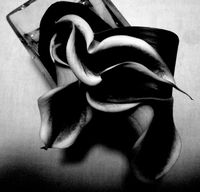
Orchid bw study 3a   My friend Mary, a career nursing leader, will never draw a full breath again. A smoker for more than forty years, she is tethered to an oxygen tank twenty-four hours a day. "Well, she was such a smoker," one of her caregivers told me. "I guess that's what you get," she continued, as if it was hard for her to empathize.    

   In my work as a filmmaker, I encounter a triplet of letters on every script: POV. There is also a PBS television series that uses the same combination.

   You may well know that POV, in these contexts, means "Point of View." When things are seen from one character's POV, the camera sees what that character sees. This means that the camera cannot see the point of view of the other character and must change locations to have that perspective.

   Because of the proximity of Valentine's day, you may imagine heart shapes in the photo above left. If you spent your time as a sculptor, you might wonder if this image is made of clay.

    The mind will always ask two questions when seeing any image:: 1) What is it? and 2) From what angle of view was it taken? But, from what POV did I make the image?
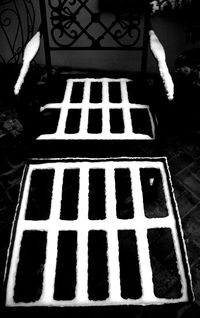
Chair slats 2     Only by staying with a complex subject can viewers appreciate what the artist may be trying to say – or what the viewer would like the image to communicate.

   The first picture is a kind of orchid. It was made from directly overhead.    

   Because black and white and drains the orchid of color, the eye has a better chance to focus on what black and white is all about including light, line, shadow, texture, depth of field, angle and POV – both yours and mine. 

   If you spent your life in prison then the second photo may bring bars to mind. But, this is only a chair. Angle of view and editing highlight contrast. There is no sharper contrast than pure white and hard-edged black.    

   What can orchids and chairs have to do with caregiving? We are all inclined to our particular point of view. Yet, the magic in our hearts enables us to shift our point of view without moving.

   We connect with a patient's pain when we connect it to something we have experienced. The moment we do, our point of view swings towards the patient.

   Immediately, our compassion rises. Only now can we begin the work of healing beyond curing.

   Jesus grounded his healing in profound empathy. He was so much in touch with our suffering that he offered his life for us. He took our point of view. 

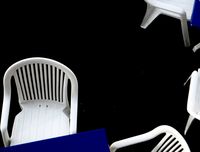
   There are only two tiny slices of color in the picture below – two glances of blue amid black and white curves. 

   Every person in need hopes we see the nuanced colors of their need. We can only do this by climbing into the cave of their pain so that we may lead them toward the light.

-Rev. Erie ChapmanFour Chairs #1  
  

Posted in

5 responses to “Days 45-47 – “Point of View””

  1. ann kaiser Avatar
    ann kaiser

    Tonight….my husband and I will go and feed the homeless at the shelter. Our Monday night tradition. I pray for God’s guidance , for tonight I will look for the color of those in need that I will serve. Thank you Erie, for shining this light to look at it from anothers POV. God Bless!

    Like

  2. Victoria Facey Avatar
    Victoria Facey

    Today I learned to remove my ready-made perspective to see another’s point of view. Erie, I nearly missed this, thinking I knew what you were writing about. This reminds me of an earlier story of truly listening instead of assuming. I’m going home now and hopefully I will carry this open-minded idea and learn something new tonight, from my loved ones’ POV…

    Like

  3. ~liz Wessel Avatar

    These are fascinating images, I especially like the lines and contours of the orchid and I would never have guessed that it was a flower. What a lovely way to express this truth, Erie. How important it is to see through the eyes of another rather than our own perspective. Perhaps, we can only really see when we drop our judgment and fear. Lately, I’ve tried to offer myself a little forgiveness for my misperceptions. Seeing through the eyes of Love is intentional and it requires our full attention. Gosh, I am grateful for the magic of the heart to be able to see differently and for the Grace that makes it possible.

    Like

  4. Marily Avatar

    Thank you Rev. Erie for yet another clear guidance in going beyond curing in our sacred journeys… swinging into ones “POV”… we may know the reasons why one could love, respond to stress, live, care, or even smell so differently…

    Like

  5. xavier espinosa Avatar

    The perspective is definitely different than when we are on the receiving end rather than the one providing the care. I remember two years ago while enjoying an evening at my friend’s home celebrating his birthday. Within the course of thirty minutes our lives were changed radically as his partner died suddenly from an aortic aneurysm. From the onset of the symptoms, to the discomfort, the seizure, my performing CPR, the arrival of the paramedics, the trip to the emergency room, the pronouncement from the physician, the method the nurses used to communicate the state of the patient- all of this was all to familiar to me.
    Yet the reality of the situation was sobering. How many times had I been the one delivering the news, sometimes rushed because of other tasks that were at hand. I can remember capturing myself and thinking of the significance of the moment to the families and friends of the patient. How would they remember the words, the looks, the faces of those bearing the news? What words would echo in their heads? Perhaps I give more importance to my presence than was warranted, but even now years later, I can vividly recall the look of the paramedics who were readying the ambulance for the next call, the deferred looks, the reaction of the admitting staff when we announced who we were there to see, the stares of the nursing staff as we were led into the family waiting room. The perspective is different, the point of view made all that much more important when we are the ones staring out as opposed to looking in.
    The sacredness of life, the mystery of death, the importance of compassion can not be fully understood until we ourselves crave for the tenderness that is required when a portal has been entered and a threshold has been crossed.
    The enlightened caregiver appreciates the moment, perhaps not because they have experienced the situation, but because they have committed themselves to seeing the essential part we play in the holiest of places, the temple of life.

    Like

Leave a reply to ~liz Wessel Cancel reply