"The forest hums his story, the brook sings the history of her journey, the treetops whisper what they see, the flowers speak to us of love. We fail to hear only because they are not using our language." – Dane Dakota
 "Well, he can't even talk, the poor little man," I heard a nurse say once about a stroke-ridden college professor, retired from decades of work as, of all things, an English teacher.
She spoke of him, unintentionally but harmfully, with a tone of pity rather than of compassion. Pity damages the ability of caregivers to give loving care. Compassion is the gift of the true healer.
The voices of many of us are stolen each year – by strokes, by cancer, by injury or for a myriad of other reasons including trauma and death itself. The moment we lose our ability to speak, much of the world tunes out all the other ways we have of communicating. We may become objects of condescension rather than people with new ways of telling our stories.
Although most of our finest artists can use words, they usually speak more eloquently with their paint brushes than with their mouths. Musicians present us with language more eloquent than words can describe. Great storytellers give voice to those who can't find the words to tell their own tales.
The world speaks to us in many languages. When we seek to understand only in terms of the language we use, we miss some of life's richest music.
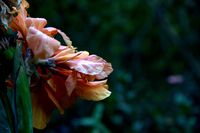 Can a flower speak? Of course. We can hear her if we forget about our learned language and listen instead with our sacred ears. Lean close to the rose and she will tell you the meaning of her sweet scent. Touch her petals and you will hear her texture. Sit before her beauty and she will talk to you about the meaning of a curve, a swirl, the way a shadow changes her mind and her mood across the afternoon, how the low slant of light can bring sadness, how she watches the moon while you sleep.
The person struck silent by a stroke has a new eloquence. Sit with him and you will learn the story of his life in the wrinkles of his age, in the fatigue in his limbs, in the depth of his eyes.
Patients always have stories to tell us. When they can't use words, Love opens us to the stories in their hearts and reveals a pathway to healing.
-Erie Chapman


 Journal of Sacred Work
Leave a reply to Marily Cancel reply