Journal of Sacred Work

Caregivers have superpowers! Radical Loving Care illuminates the divine truth that caregiving is not just a job. It is Sacred Work.

About

"Spirituality is a dynamic and intrinsic aspect of humanity through which persons seek ultimate meaning, purpose, and transcendence, and experience relationship to self, family, others, community, society, nature, and the significant or sacred. Spirituality is expressed through beliefs, values, traditions, and practices." -From Building A Consensus For Compassionate Care
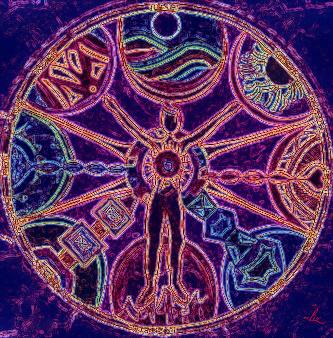
Mandala- LizIn an effort to create more compassionate healthcare systems, an international network of clinicians, researchers and educators (in partnership with the Fetzer Institute) are working to integrate spirituality as an essential element in whole person care.  The above definition of spirituality was developed to help guide their efforts.

The current medical model in healthcare focuses on treatment of the person’s physical ailments and while technological advances afford many lifesaving or life prolonging treatments, this focus is myopic in scope. Of equal, importance is consideration of a person’s emotional, mental and spiritual well-being.

Spirituality is about discovering what creates a sense of connection and meaning in a person’s life.  A core component of compassionate care is to listen to a person’s story and resist the need to fix. Too often we are not listening to understand but we are already thinking about how we will respond. This jumping ahead is a hindrance to real communication. When we intentionally offer our full listening presence a safe space for sharing unfolds that is a sacred.


Christine Pulchalsky, a renowned physician and social worker recognizes the value of investing time up front in cultivating relationships with patients and family members.  She cautions that "Unless we value the relationship between the physician and the patient, the nurse and the patient – unless we say that is of number one importance and we’re going to invest in that, we’re just going to keep going downhill.”  She also encourages inner reflection as a formative experience for clinicians to keep us grounded in remembering why we entered into a healing profession and to renew meaning and purpose in our work.

It is affirming to discover like hearted individuals who embrace the precepts of Radical Loving Care and I am grateful to Erie Chapman for his pioneering work and visionary leadership in healthcare.

Contributed by Liz Sorensen Wessel

Mandala by ~liz

To listen to a conversation with Christine Pulchalsky go to:

http://wuwm.com/post/argument-why-we-should-include-spirituality-medical-care

Posted in

6 responses to “Days 31-32 Radical Loving Care”

  1. Maureen McDermott Avatar
    Maureen McDermott

    How inspiring! Each of us is aware of the power of treatment that is holistic, compassionate and loving. Have we not experienced situations where the person with her emotional, spiritual, physical and mental needs is the focus of care and the results are amazing. Thank you Liz and Erie.

    Like

  2. erie chapman Avatar
    erie chapman

    “Spirituality is about discovering what creates a sense of connection and meaning in a person’s life.” I like your definition a lot better than the long, almost convoluted one developed (probably by a committee) at the wonderful Fetzer Insitute.
    It is a sense of “connection” at the highest level that transforms transactions into transcendent experiences. When healing occurs, it is through the spiritual pathway, not the traditional medical one.
    Thank you also for your affirmation of Radical Loving Care, Liz (and thank you also, Maureen.) Your own spirituality makes healing possible for both those around you and those far away. That is something only spirituality can accomplish.

    Like

  3.  Avatar
    Anonymous

    Liz; thank you for stressing the importance of integrating spirituality as an essential element in the whole person care. Time is of the essence and to be able to spend time with the patient and listen to his/her overall concerns gives us the opportunity to provide help for the individual. Thank you for sharing Dr. Pulchalsky’s talk on this subject. It is encouraging that she is introducing this model in the medical training for the professionals. Thanks to Erie also for encouraging Radical Loving Care in the hospital setting. sbeng

    Like

  4. ~liz Wessel Avatar

    Yes, I thought Dr. Pulchalsky’s talk was very practical. I think we offer spiritual care without even knowing that is what we are doing. For whenever, we listen wholeheartedly it sacred ground (without fulfilling own need to fix and without judgement. Thank you, Suan

    Like

  5. ~liz Wessel Avatar

    Yes, the spirituality definition was developed during a International Summit in 2014 where theologians, philosophers and healthcare professionals came together from 27 different countries.
    With connection comes that instantaneous moment of understanding and of being seen. It can be quite as simple as a fleeting smile, a shared moment and yet the experience is quite profound. Thank you Erie.

    Like

  6. ~liz Wessel Avatar

    So often what people remember most is how we tend to them as a person, much more so than the medical aspect of care. Although, it is important to balance both; excellence and compassion.
    I recall after my brother died I developed a frozen shoulder from not sleeping in a bed for extended periods of time. Interestingly, my affliction was a mirror image of my brothers painful arm and shoulder. When I sought medical care and my symptoms were assessed the fact that my brother just died slid by without notice. Yet, looking back it was my grief that needed attention. I was offered surgery but I declined.

    Like

Leave a reply to ~liz Wessel Cancel reply