 It is the dreaded beginning to a letter no soldier's spouse wants to receive. Across centuries millions of these missives have earthquaked families.
On September 30, 1862 such a letter was delivered into the young hands of Mrs. Degrass S. Chapman. A subsequent paragraph offered the young wife-turned-widow cold comfort. "He was a good soldier, always at his post, ready for duty, brave and fearless under the murderous fire of the rebels. His comrades, who never shrank from danger, shed tears over his grave and feel his loss deeply."
The next paragraph cancelled that comfort. "He lay thirty-six hours on the field of battle without any assistance except a rebel gave him a drink of water." The news story contains the parenthetical comment, "(I could spare that rebel.)"
Degrass died on September 17, 1862, the bloodiest day of The Civil War, at the Battle of Antietam. His first name is my middle one.
When news of death comes we always hope the loved one passed peacefully. Instead, my great uncle suffered on the battlefield receiving brief relief from an unexpected caregiver, an enemy soldier.
"Thus fell my brother," Degrass' older half-brother Alonzo wrote. "and while I feel deeply his loss my heart swells with thanks giving to God that he died at his post fighting bravely in his country's cause."
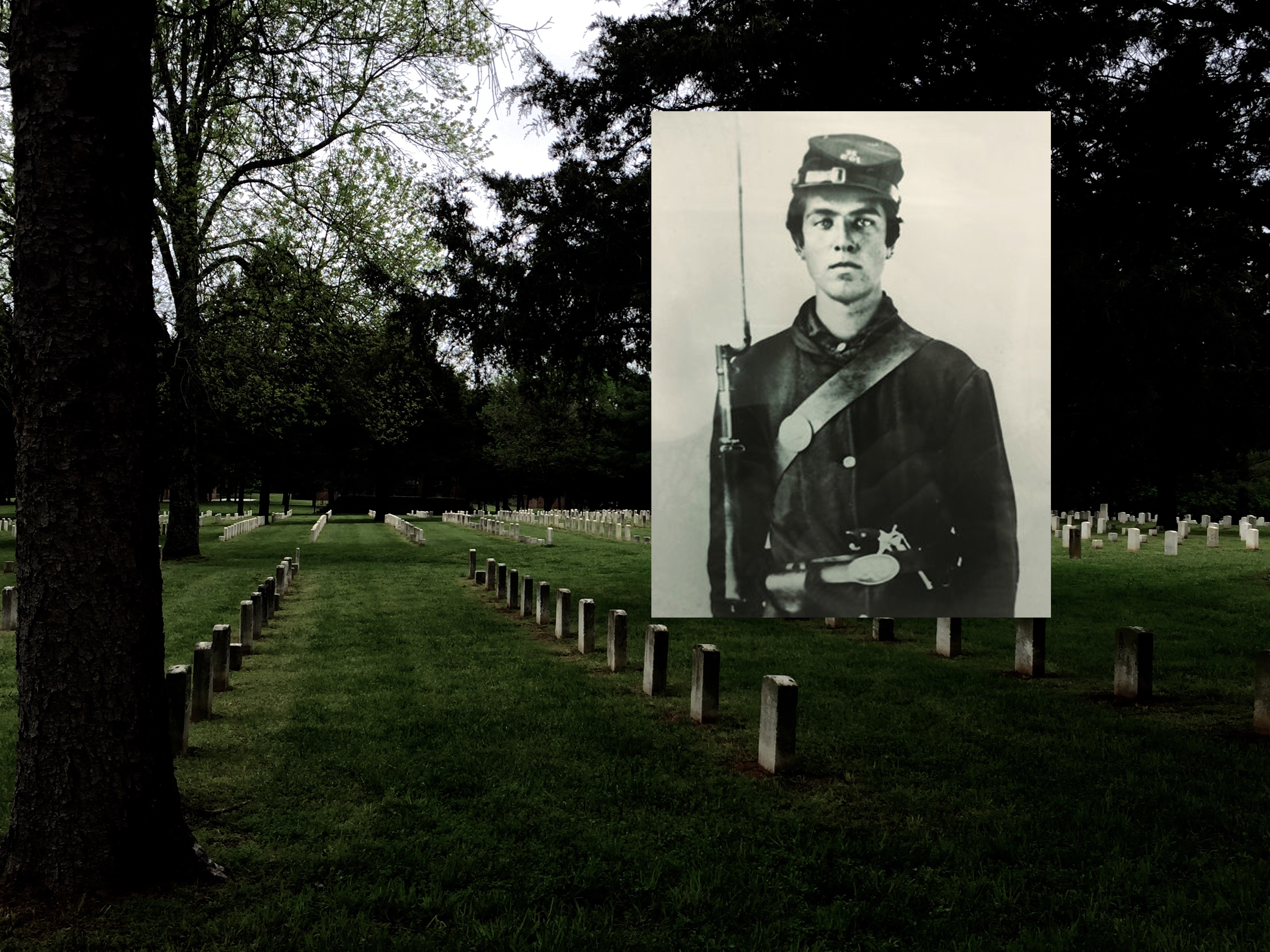
Fourteen months after Antietam, Alonzo's & Degrass' younger brother Harlan stood his ground at the Battle of Armstrong Hill in Tennessee. On the afternoon of November 25, 1863 (the day before the first official Thanksgiving) he raised his rifle to "shoot a Reb." Suddenly, fire erupted in his hip. A bullet from another Confederate soldier had lodged there. He would carry it until his death in 1920.
Of course, had that bullet been as lethal as the one that struck Degrass neither his subsequent children nor his descendants (including me, one of his great grandsons) would be here.
We descendants have unknown caregivers to thank. After nine months in an army hospital Harlan went home on furlough. He got married, on crutches, to my great grandmother Mary C. Pitkin on March 31, 1865.
Later, he offered a picture of the other kinds of suffering the wounded endure when he described his trip in a horse drawn battlefield ambulance. "There was no particular road. It was deep mud, over limbs and rocks, making it a terrible ride." Afterwards he was placed in Bell House where both enemy & union soldiers were being treated.
Memorial Day speeches referring to millions "who suffered and died for our freedom" rarely reach our hearts. It is individual stories of comrades grieving, of the wounded lying caregiver-less & of unexpected humanity that can tear tears from our eyes.
Thank you, veterans. And blessings to every family who has ever received one of those wrenching letters that "regret to inform you."
-Erie Chapman
Combination Photograph: Stones River Civil War Cemetery & Private Harlan Chapman (Harlan is buried in Butternut Ridge Cemetery.)


 Journal of Sacred Work
Leave a comment