 During my nursing career, I have held various positions, including a period as an educator facilitating nursing orientation for home health. As part of that orientation, I often asked newly hired nurses to write about a memorable experience they had while caring for a patient. One such story stood out—not because everything went smoothly, but because it didn’t.
Community nursing presents unique challenges. Unlike in hospitals, the home environment is uncontrolled, unpredictable, and often lacking in readily available supplies. Transitions of care can be poorly coordinated, putting patients at risk and requiring nurses to improvise in real time. This particular story, shared by a new orientee after her first joint visit with a preceptor, illustrates those challenges vividly.
The patient had been referred to home health care, but the referral came late, and crucial discharge teaching—especially on insulin administration—had not been initiated. The nurse and her preceptor entered a stressful and chaotic home situation that could have been avoided with better discharge planning and coordination from the facility.
I often shared this narrative during orientation sessions to help new nurses understand how community nursing differs from other settings. It requires a specialized skill set: resourcefulness, critical thinking, strong clinical judgment, adaptability, empathy, and compassion. While it can be demanding, it is also incredibly rewarding.
The Orientee's Story:
“My first clinical visit during home health orientation involved a patient recently diagnosed with diabetes and newly prescribed insulin. She had been discharged from a Skilled Nursing Facility (SNF) two days prior. My preceptor and I arrived expecting a straightforward teaching session.
To our surprise, the patient had not been discharged with any diabetic supplies. While she had insulin, there were no syringes or test strips, and her old glucometer was no longer functional. After unsuccessfully trying to make it work, my preceptor suggested the patient’s husband go to the nearby pharmacy to purchase a new meter and supplies. Fortunately, we found a prescription for syringes in the SNF discharge paperwork, and he left to retrieve them.
While he was gone, we continued our assessment and engaged with the patient, who was growing increasingly anxious—she had not eaten breakfast in anticipation of the visit and her first blood sugar check. We reassured her as best we could, and thankfully, when her husband returned, her blood glucose wasn’t dangerously low.
We taught her husband how to administer the insulin injection, but the home environment was far from ideal. The phone rang repeatedly, the couple argued frequently, and both were clearly overwhelmed. Despite the chaos, my preceptor remained calm and focused, navigating the situation with skill and grace while coordinating with the physician to clarify orders and ensure the patient had what she needed.
That day taught me a valuable lesson: no matter how well you plan, things can—and will—fall apart. Distractions are inevitable, and rarely does a visit go exactly as expected. What matters most is being adaptable, patient, and persistent. While I can’t control the home environment, I can tailor my teaching to fit the moment and support the patient and family in making a safe recovery at home.”
Final Thoughts:
Stories like this are essential teaching tools. They highlight the realities of community nursing and prepare new clinicians to expect the unexpected. They also emphasize the vital role of preparation, communication, and flexibility in ensuring safe, compassionate care outside the hospital setting.
Liz Sorensen Wessel
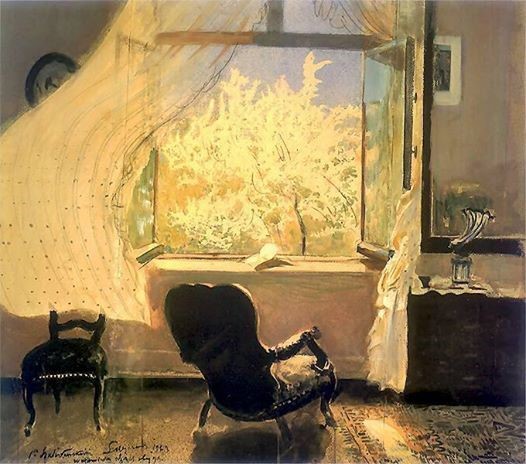
Note: This painting is by José Benlliure y Gil (1855–1937), a Spanish painter. The artwork is titled “Interior with open window” (1923)


 Journal of Sacred Work
Leave a comment