[The following meditation was written by Rev. Jerald Smith, Chaplain at Parrish Medical Center in Titusville, Florida]
“Through some moment of beauty or
pain, some sudden turning of our lives, we catch glimmers of at least
what the saints are blinded by…” (Frederick Buechner, Listening To Your Life, p.
169)
My first experience at an auction
was as a boy at the Bradford County fair in Starke, Florida. The auctioneer was
selling steers that had been raised by kids in the Future Farmers of America
(FFA). I remember thinking how foreign the language sounded and wondering how
anyone could spit words out so quickly. He called for bids, acknowledged bids
and challenged the bidders to ante up higher and higher until he said
“Sold!”
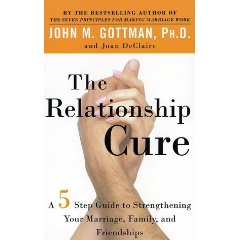
In their book, The
Relationship Cure , authors John Gottman and Joan DeClaire talk about
relational bids. These are efforts to connect with others. We all make them,
these bids, with a look, a smile, a greeting or a comment that invites others to
connect with us. Dr. Gottman speaks about three possible responses to bids and
the differences those responses can make in a relationship. Take the simple
question, “Would you like to have dinner with me?” Turning toward looks like this. “I’d love to,
thanks.” Or, “That’s a nice invitation, but I can’t. I have to get home to my
boyfriend.” Turning away is illustrated by, “No. Sorry, I’m busy.” And turning
against by, “No, I’m cleaning the lint out of my dryer tonight.”(p. 55)
The different responses show
varying levels of regard toward the other. Turning toward shows a highly
positive regard. Turning away is less positive and bordering on indifference.
Turning against is negative and moving toward hostility.
Dr. Gottman’s research with
hundreds of married couples revealed that in couples headed for divorce, men
turned away or against their spouse’s bids 82% of the time and women did so 50%
of the time. In happily married couples the numbers were 19% of the time for men
and 14% of the time for women (p. 4). Dr. Gottman observed that when people
received consistently negative responses to their bids, they quickly gave up
trying and the relationship deteriorated rapidly.
This bidding process doesn’t just
happen between couples. We make bids and
receive bids from co-workers too. Patients bid for caregivers’ attention with
call lights, questions and facial expressions.
Right now, somewhere, someone is
making a bid to you, bidding for your attention or care. Which response will you
choose?


 Journal of Sacred Work
Leave a reply to Jerald Smith Cancel reply