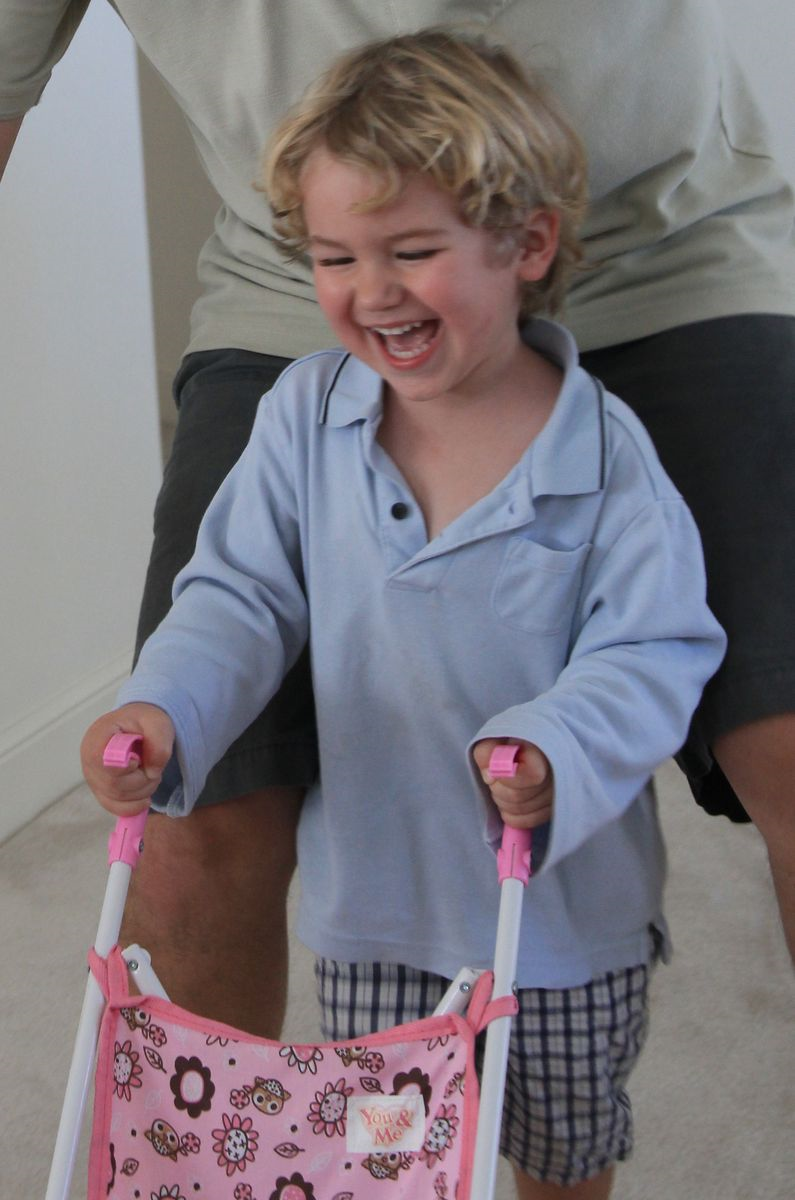
 A child laughs. Everyone feels better. But, can laughter actually help cure illness? Some doctors think so.
Carole Williams had nothing to laugh about on the morning she awoke with no feeling in her feet. She & her husband Stu went to the doctor.
After examination the physician's face bore that grim expression no patient wants to see. “You have Guillain-Barré Syndrome,” he told Carole.
Was that one of your childhood nightmares: To be completely paralyzed, unable to speak, drowning in your own body?
That is the future Carole’s physician described. “The numbness in your toes will rise up your legs. In a few days you will be paralyzed from the waist down. Next your upper body will numb. Then, you will be unable to move except, perhaps, to blink.”
Carole's next year was agonizing until one afternoon a therapist appeared, He offered brief freedom.
“We are going to place a device in your throat," the therapist said. As you exhale, you can say one sentence. Let me know when you are ready by blinking your eyes.”
She blinked. The device was inserted.
Her husband waited expectantly. Which of the thousands of wishes his wife had bottled up would pour forth?
Carole exhaled her sentence. It sounded to Stu like, “Gedamihrablegeeblaurhbla.”
“Are you trying to say you love me?” Stu asked.
Carole blinked no.
“Are you trying to say you love our kids? Again, Carole blinked a no.
“Let’s try again,” the therapist offered.
This time, Carole sputtered three words, “Get my hairdresser!”
When patients are bedridden small things become big. Great caregivers understand.
But soon after this incident Carole's body pivoted towards health (Subsequently, she experienced a ninety-nine percent recovery.) Did laughter help tip the scales?
Carole and Stu tell & retell this story. Each time, they roar with their audience about that magic moment when laughter illuminated their darkest hours.
-Erie Chapman


 Journal of Sacred Work
Leave a reply to Anonymous Cancel reply